
Meet PIL: The Business Card That Pays You Back
TL;DR: PIL is a spend management platform that lets businesses create, fund, and control USD virtual cards from wallets funded in Naira, Cedi, or stablecoins. Its cashback program rewards businesses with 0.5% to 2%, depending on how much they spend on their cards, and is paid monthly. Every team, project, and vendor can have its own capped card, so recurring payments keep running, budgets stop leaking, and finance sees every dollar in real time.
5 Minutes

PIL’s origin story: From an internal fix to a $2.1 million product
Picture a marketing lead at a Lagos startup on a Friday afternoon. They’ve just approved a campaign; the creative asset is live and the budget is waiting. Just then, the ad platform declines the payment card on both a first and second attempt. By the time finance finds another card with enough room, the weekend's traffic has gone to a competitor.
That scenario comes from Cardtonic’s own experience. A leading consumer financing platform, Cardtonic spends heavily on ads and software, and for a long time, paying for these felt like a gamble, just like that Friday. Cards had unpredictable limits, were hard to fund, charged steep fees and failed exactly when a payment was urgent. So Cardtonic built an internal tool to fix its own problem. That tool grew into a product for other businesses facing the same wall, and Cardtonic raised $2.1 million to scale it. The product is PIL, built by Cardtonic and operated by PILpay Technologies Ltd in Canada and Tonic Technologies Limited in Nigeria.
So, what is PIL?
PIL by Cardtonic is a business-grade virtual dollar card platform that helps businesses and marketers make global payments with ease and track every expense from a single web dashboard.
Built for high-volume operations, it lets businesses create and fund cards using Naira, Cedi, or stablecoins such as USDC, then make large payments without the usual restrictions.
With PIL, marketers can run ads without payment failures getting in the way, finance teams can pay for software subscriptions, procurement teams can issue a dedicated card for each vendor, and accountants can track spending as it happens.
What does PIL do?
PIL changes how businesses handle money by making payments simple and every expense visible. Businesses can create cards in seconds for different departments or projects, at no cost, each with its own limits and rules.
Administrators can also assign a budget to each card to prevent overspending, receive detailed transaction data the moment a payment goes through, and spot spending patterns over time.
Feature | What it does | What you get |
Virtual USD cards | Up to 8 instant virtual cards per team, project, department or vendor. No card creation or usage fees; however, an FX fee applies when you fund a card from your wallet . | A separate card for every ad account, tool or subscription, usable anywhere dollar cards are accepted. |
Local and stablecoin funding | Funds a wallet in Naira, Cedi or stablecoins such as USDT and USDC | Dollar payments without a dollar account |
Spend controls | Sets spend caps and expiry dates before the first payment | A budget that holds, card by card |
Team access | Gives teammates role-based access and assigns cards to teams | Spending access that matches job roles |
Freeze and terminate | Freezes a card temporarily or deactivates a card instantly | Clean offboarding when a project ends or someone leaves |
Block Merchant | Stops a merchant or vendor from taking a payment from your card | Cancelled subscriptions and unwanted vendors can no longer bill you |
Low-balance Alert & Auto-top up | Prompt notification as card reaches low balance, and auto-funding from wallet to particular card | Fewer failed payments and no refill to remember |
Tracking and exports | Shows live dashboards, labelled categories, receipt capture and statement exports | Faster reconciliation at month end |
How does PIL work?
Getting from sign-up to a working card takes four steps:
Fund the wallet. Once your account is created, you are instantly assigned a wallet that can be funded in Naira, Cedi, or supported stablecoins. Once funded, you can move money to cards for spending, and it gets automatically converted to dollars.
Create the card. Create up to 8 cards, each for a team, vendor or spend category, in seconds and at no cost.
Set the rules. Assign each card to an owner and set a spend limit for it.
Start paying. Attach each card to a tool, subscription or vendor, and manage everything from the dashboard.
When a project wraps or a team shrinks, you can freeze or deactivate that one card, and every other card keeps working.
What can you pay for with PIL?

PIL works on 12,900+ platforms and on any website that accepts dollar cards.
Advertising: Meta Ads, Google Ads, TikTok and LinkedIn.
Productivity and support tools: Slack, Intercom, Coursera and Apple.
Cloud and infrastructure: AWS, DigitalOcean and MongoDB.
How does PIL pay you back?
PIL pays businesses cashback on card spend, from 0.5% to 2% depending on how much they spend each month, so the more your cards are used, the more you earn back. Cashback is earned on your monthly card spend and paid into your PIL wallet at the end of the month. From there, you can fund cards to subscribe to tools, run ads or pay for anything else online.
The table below shows each cashback tier (with a maximum cashback cap of $500 per customer per month).

Monthly Card Spend | Cashback Earned |
$100 to $1,000 | 0.5% |
$1,001 to $5,000 | 1% |
$5,001 to $10,000 | 1.5% |
Above $10,000 | 2% |
Spending normally feels like a loss because the money leaves and nothing returns. PIL brings part of that money back, and the reward grows as the business grows.
Who is PIL for?
PIL is built for businesses that have felt the sting of a declined card at the worst possible moment. If your team pays for ads, software, or vendors in dollars, and your money starts out in Naira, Cedi, or stablecoins, this is the platform designed around your problem.
Here’s how it fits different teams:
The agency juggling client budgets gets a virtual card per client, real-time visibility and clean reconciliation at month end.
The CFO who wants answers without chasing people gets instant card issuance, automated receipt capture and month-by-month spend tracking.
The advertiser running campaigns across platforms keeps every campaign under control, with spend tracked in real time.
The growing company gets cards that scale with the team, from startups and SMEs to larger enterprises.
Frequently Asked Questions
What is PIL?
PIL is a spend management platform that lets businesses create, fund and manage USD virtual cards for teams, projects and vendors. It is designed for companies that pay global platforms from Naira, Cedi or stablecoin balances.
How do I fund a PIL card?
Fund your PIL wallet in Naira, Cedi or stablecoins such as USDT and USDC, then allocate money to each virtual card. Stablecoins are designed to track the US dollar, but conversion rates can vary at the time of funding.
How many cards can I create on PIL?
Businesses can create up to 8 cards. Because each card is meant for a team, vendor or spend category, most businesses group their payments by function, for example one card for ads, one for software subscriptions and one for cloud infrastructure. Cards are free to create, and you can freeze or close a card you no longer need.
Can my whole team use PIL?
Yes. Invite teammates with role-based access and assign cards per team, project or subscription. Finance keeps oversight of every card.
Is PIL secure?
PIL is PCI DSS compliant and processes user data under applicable data protection laws. Separate cards per team or project limit the damage if one card is exposed. There are also security measures such as KYC and KYB verification, PIN, and card freeze or termination features to keep cards and funds safe.
How much does PIL cost?
PIL charges no card creation or usage fees, and you earn up to 4% cashback depending on your monthly spend. A small FX fee applies when you fund a card from your wallet, and the exact amount depends on the amount funded.
Ready to try PIL?
Move the business expenses you already make onto PIL, pay nothing to create the cards, and earn up to 2% of your spend back every month.

Author
Ayodeji Falaye
More Stories


Because payments shouldn’t hold your business back

Intuitive Navigation
Intuitive navigation: access anything in seconds
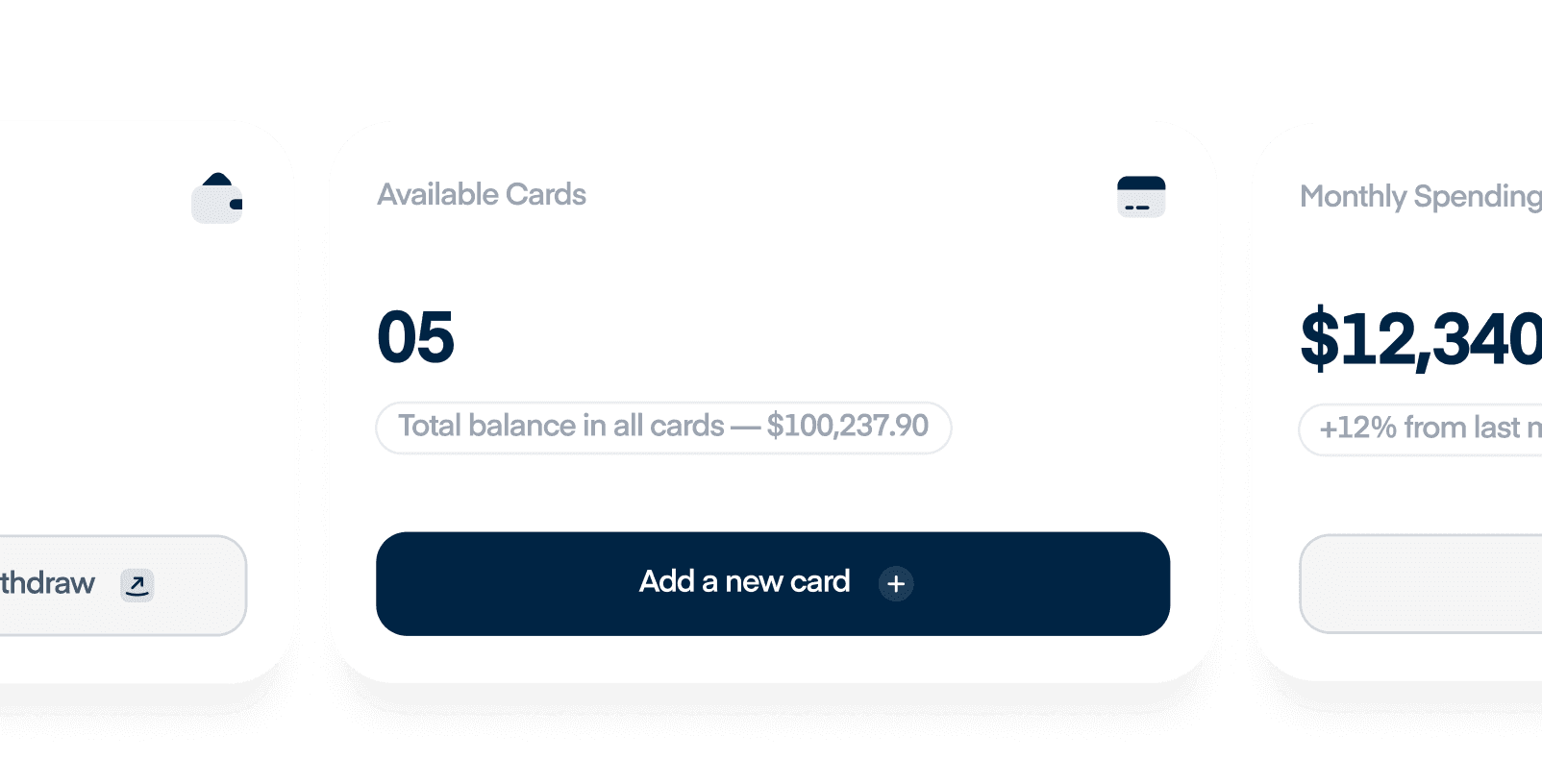
Manage Multiple Cards
Manage Multiple cards across teams and projects
Crypto funding


Fund in NGN, GHS, or Stablecoins

Team Cards
Assign cards to teams instantly
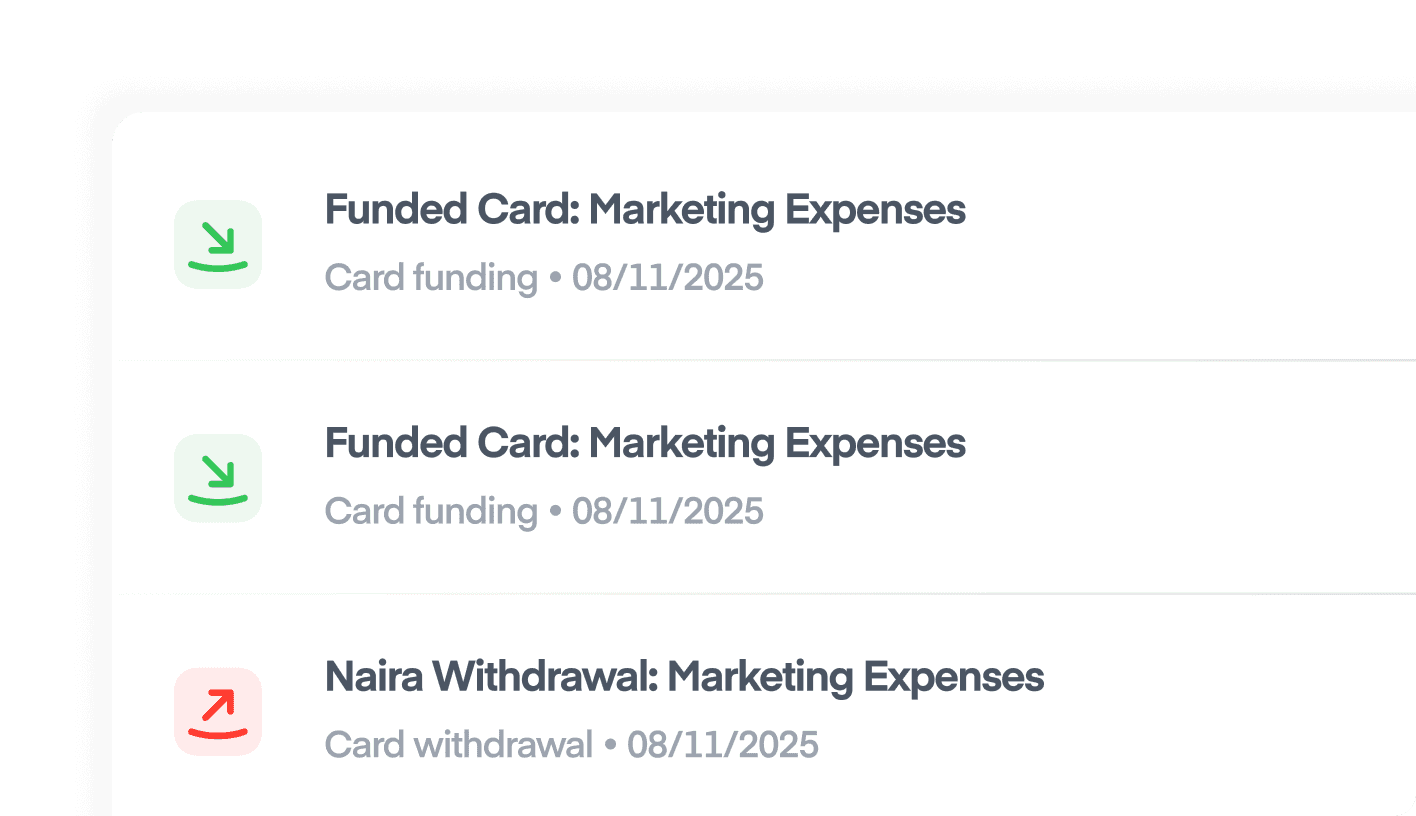
Expense Tracking
Track every expense in real time
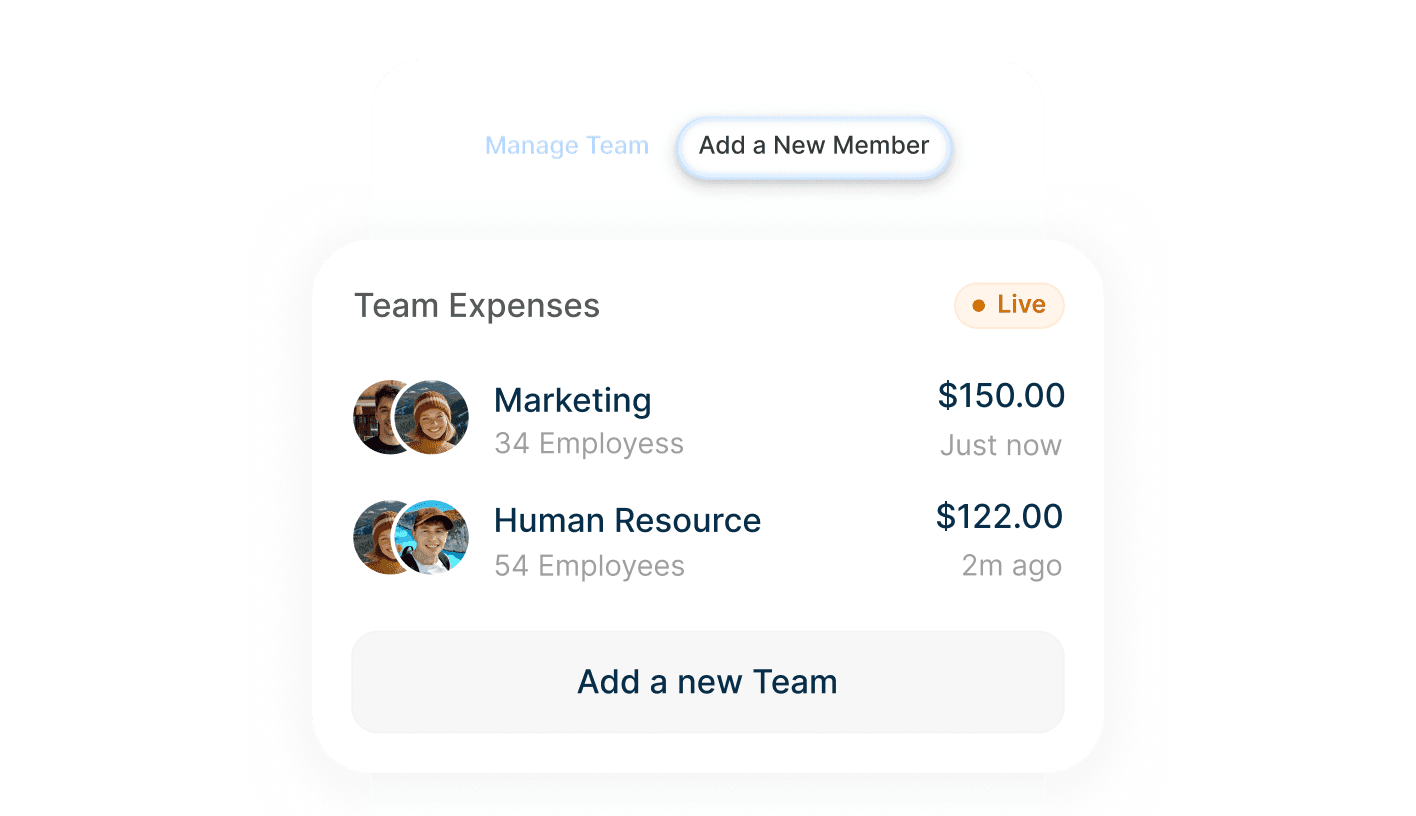
Team management
Full team management and spend oversight


Advertising