
The Best Virtual Cards for Businesses in Africa (2026)
Quick answer: If your business spends through more than one person, the deciding factor should be whether the card has team controls at all. PIL is the only option on this list built as a full spend management system rather than a payment add-on, which is why it's the default here for team spend.
Do you need a virtual business dollar card that comes with a full spend management system?
8 Minutes

The One-Card Problem
For most Nigerian and Ghanaian businesses, the virtual card journey often starts with a founder signing up for a consumer virtual dollar card to pay for an ad platform or a SaaS subscription. It works, and a second person takes over the card to make another payment. Then a third. The card keeps getting shared, and soon the statement becomes difficult to read. And sometimes, the same card could hit its limit in the middle of the campaign without being noticed.
The problem here is using a card designed for one person's spending to manage a company's. With a company (corporate) card, businesses can issue up to 20 virtual cards at no additional cost and assign cards to different team members or departments, with separate spending controls for each card. These corporate cards in virtual forms are even better, they help businesses manage spending more easily, track transactions, and offer stronger fraud protection all without physical logistics.
But that kind of team-level infrastructure is only available on platforms built for business use, not on consumer virtual card products that simply issue a digital card number.
So, this guide is written to present the best virtual cards available to African businesses in 2026, what each one does well, and how to choose the right one for where your business actually is.
The 6 Best Business Virtual Cards for African Teams in 2026
We evaluated each on the criteria that actually break businesses, not just individuals: how many cards you can issue, whether spend controls exist per card, what it costs at real transaction volume, and whether it was built for a team or retrofitted for one.

1. PIL (by Tonic Technologies)
Key features: Up to 8 virtual dollar cards, multi-currency wallet (NGN, GHS, USDT/USDC), real-time transaction visibility, team access controls, approval workflows, low balance alerts, automatic top-up, merchant blocking, per-card PDF/CSV reporting.
Pricing: Zero card usage fees. Small FX fee on wallet funding.
Best for teams that: Run ads across multiple platforms, need per-department spending visibility, manage distributed teams across time zones, hold stablecoins as part of their treasury, or have a finance lead who needs month-end reconciliation to take minutes rather than days.
PIL is a business spend management platform that provides virtual dollar cards for businesses and teams. The cards were designed as part of a spend management system rather than as a standalone payment tool, which makes it distinct from every other option on this list.
With PIL, businesses can create up to eight virtual dollar cards, each labelled by purpose (for instance: one for Meta Ads, one for AWS, one for SaaS subscriptions, one for vendor payments) with its own spending limit and its own transaction history. The PIL wallet accepts funding in Naira, Cedi, or stablecoins (USDT/USDC), and cards are accepted on all major global platforms including Google Ads, Meta Ads, LinkedIn Ads, TikTok Ads, Slack, Adobe, Coursera, and others, including recurring billing and threshold-based charges.
What differentiates PIL from consumer cards and most other business cards on this list is the management layer. The platform has a real-time dashboard where every transaction across every card is visible the moment it happens, per-card statements exportable as PDF or CSV on demand, approval workflows that require a designated approver to sign off before card funds move, and low balance alerts that notify every person assigned to a card before a payment fails rather than after.
2. Grey Business
Key features: Multiple virtual cards, multi-currency balances (USD, EUR, GBP), team access, invoicing, Apple Pay and Google Pay support.
Pricing: Card issuance costs US$4. No monthly maintenance fee.
Best for teams that: Receive international payments and want to spend those balances directly, or run a small agency with straightforward international billing needs.
Grey offers virtual Visa cards across Nigeria, Kenya, Ghana, and Morocco, connected directly to Grey's supported foreign currency balances. The card connects directly to Grey's supported currency balances, allowing users receiving payments in USD, EUR or GBP to spend those balances without manually topping up the card before every purchase.
Grey has added business features including multiple card creation, team access, and invoicing, making it a reasonable option for small businesses and agencies receiving international payments who want to spend those balances without the friction of converting to Naira or Cedi first.
The challenge for larger or more complex businesses is that Grey was built primarily for the individual freelancer and remote worker market. Team spend controls, approval workflows, and the kind of department-level visibility that growing businesses need are not the core of what Grey does.
3. Raenest (formerly Geegpay)
Key features: Multiple virtual Visa cards, multi-currency funding (USD, GBP, EUR, NGN, USDT, USDC), spending limits per card, real-time expense tracking.
Pricing: Card issuance costs US$3 (one-time). No monthly maintenance fee. US$0.50 per transaction.
Best for teams that: Need multi-currency funding flexibility including stablecoin support, or run agency operations with multiple client ad accounts needing separate cards.
Raenest offers virtual USD VISA cards for freelancers, agencies and businesses across Nigeria, Ghana and Kenya. Advertisers can fund the card using balances held in USD, GBP, EUR, NGN, USDT or USDC. The range of supported funding currencies is one of Raenest's strongest features, particularly the stablecoin support, which makes it accessible for businesses with crypto-denominated treasuries.
Businesses can create multiple cards and assign spending limits, which provides a basic level of spend control. The per-transaction fee of US$0.50 is worth factoring into the cost calculation for businesses making high-frequency payments on a card processing 200 transactions a month, that adds up to $100 in transaction fees alone.
4. WorldFirst World Card
Key features: Up to 20 virtual cards at no cost, 150+ currency support, multi-currency account, separate spending limits per card, real-time tracking.
Pricing: Zero card issuance fee. Transaction fees vary by currency and payment type.
Best for teams that: Have significant multi-currency international payment volumes, particularly businesses importing or exporting across multiple markets simultaneously.
World Card by WorldFirst lets businesses create up to 20 virtual cards at no cost and pay in 150+ currencies. For businesses managing large international payment volumes across multiple currencies, the World Card supports 150+ currencies, covering payment scenarios that most other cards on this list cannot.
The card is linked to WorldFirst's World Account, a multi-currency business account that allows businesses to hold and pay in multiple currencies without converting everything back to a base currency. For African businesses with significant USD, EUR, or GBP payment needs alongside local currency operations, this infrastructure is valuable.
The limitation is accessibility: WorldFirst's primary market is businesses with established international trade operations, and the onboarding process reflects that. For an early-stage Nigerian startup primarily needing a reliable card for ad spend and SaaS subscriptions, the setup complexity may outweigh the currency breadth.
5. Eversend
Key features: Virtual USD Visa card, multi-currency wallet, available across Nigeria, Kenya, and Ghana, instant card creation.
Pricing: US$5 card issuance. US$1 monthly maintenance fee. Transaction fees apply.
Best for teams that: Operate across multiple African markets and need a single card solution that works consistently across Nigeria, Kenya, and Ghana.
Eversend offers a virtual prepaid Dollar card available to users in Nigeria, Kenya, and Ghana, funded through its digital wallet. Users in Nigeria, Kenya and Ghana can create a card directly in the app, load funds from USD or converted local currencies, and begin spending instantly.
Eversend is built for businesses operating across multiple African markets, having a single card that works across Nigeria, Kenya, and Ghana without switching platforms is genuinely useful. The wallet supports multiple currencies, which simplifies cross-border operations.
The card issuance fee of US$5 plus a US$1 monthly maintenance fee and per-transaction fees make Eversend more expensive than some alternatives for high-frequency business use. It is a stronger fit for businesses with pan-African operations than for businesses whose primary need is reliable access to global ad platforms and SaaS tools.
6. Chipper Cash
Key features: USD virtual Visa card, zero issuance fee, simple setup, works anywhere Visa is accepted.
Pricing: Zero card issuance fee. Transaction and monthly spending limits apply.
Best for teams that: Are very early stage with one person managing all payments, or need a quick, low-cost card for occasional international purchases.
Chipper Cash offers a prepaid USD virtual card with transaction and monthly spending limits for advertisers in Nigeria and Ghana. The limitation for business use is the absence of team features. Chipper Cash is designed for individual users, and the spending limits and controls reflect that. For a sole founder or a very early-stage business with one person managing all payments, Chipper Cash is a practical option. For any business with a second person spending company money, the shared card problem appears immediately.
How to Choose the Right Virtual Card for Your Business

The right card depends less on which one has the longest feature list and more on what your business actually needs right now.
If your primary need is ad spend and SaaS subscriptions with team-level visibility: PIL is the most purpose-built option for this combination. The dedicated card per campaign or tool, the real-time dashboard, and the zero card usage fee make it the strongest fit for businesses whose payment complexity comes from managing multiple team members across multiple platforms.
If your business receives international payments in USD, EUR, or GBP and wants to spend those balances directly: Grey or Raenest are worth evaluating, particularly if you want to avoid converting back to local currency at every payment cycle.
If your business has significant multi-currency international trade operations: WorldFirst's 150+ currency support and multi-currency account infrastructure may justify the additional setup complexity.
If you need a pan-African card that works consistently across multiple African markets: Eversend's regional coverage makes it the most practical option for businesses operating across Nigeria, Kenya, and Ghana simultaneously.
If you are very early stage and need the simplest possible setup: Chipper Cash provides the lowest-friction entry point, with the understanding that team features will require switching to a business-grade platform as the company grows.
Why Should You Use PIL?
Every card on this list will get you a payment through. The real difference shows up the moment a card designed for one person's spending has to answer for a team's. A consumer card has no idea who spent what, or whether they should have.
PIL was built to know that from the start with a dashboard that shows every transaction the moment it happens. For African businesses hitting that scaling point where one shared card stops being enough, that's the actual gap PIL was built to close.
Create your PIL account and issue your first business virtual card in minutes.
Frequently Asked Questions
What is the best virtual card for businesses in Nigeria?
The best virtual card for a Nigerian business depends on its specific needs. For businesses managing team spend across multiple departments and global platforms, PIL offers the most complete business-grade infrastructure with multiple cards, real-time visibility, approval workflows, and zero card usage fees. For businesses receiving international payments in foreign currencies, Grey or Raenest offer strong multi-currency options.
What is the difference between a consumer virtual card and a business virtual card?
A consumer virtual card is designed for one person making individual purchases. A business virtual card is designed for teams, offering multiple cards with individual limits, shared dashboard visibility, approval workflows, and reporting that makes month-end reconciliation manageable. Most virtual cards available in Nigeria and Ghana were built for consumers. PIL is built specifically for business use.
Can Nigerian businesses use virtual cards for Google Ads and Meta Ads?
Yes. PIL virtual dollar cards are accepted on Google Ads, Meta Ads, LinkedIn Ads, TikTok Ads, and most major ad platforms, including recurring billing and threshold-based charges. The PIL wallet is funded in Naira or stablecoins and cards spend in dollars on global platforms.
Do virtual cards in Nigeria charge transaction fees?
It varies by provider. PIL charges zero fees on card usage (the only charge is a small FX fee when funding the wallet). Raenest charges US$0.50 per transaction. Eversend charges per transaction and a monthly maintenance fee. Chipper Cash has no issuance fee but applies transaction and spending limits.
Can African businesses fund virtual cards with stablecoins?
PIL and Raenest both support stablecoin funding (USDT/USDC). For crypto-native businesses holding stablecoin treasuries, this eliminates the need to convert to fiat before funding business cards.
How many virtual cards can a business create on PIL?
PIL supports up to eight virtual dollar cards per business account. This covers most growing African businesses, one card per major spending category: advertising, software subscriptions, cloud infrastructure, vendor payments, and team expenses.
Author
Ayodeji Falaye
More Stories


Because payments shouldn’t hold your business back

Intuitive Navigation
Intuitive navigation: access anything in seconds
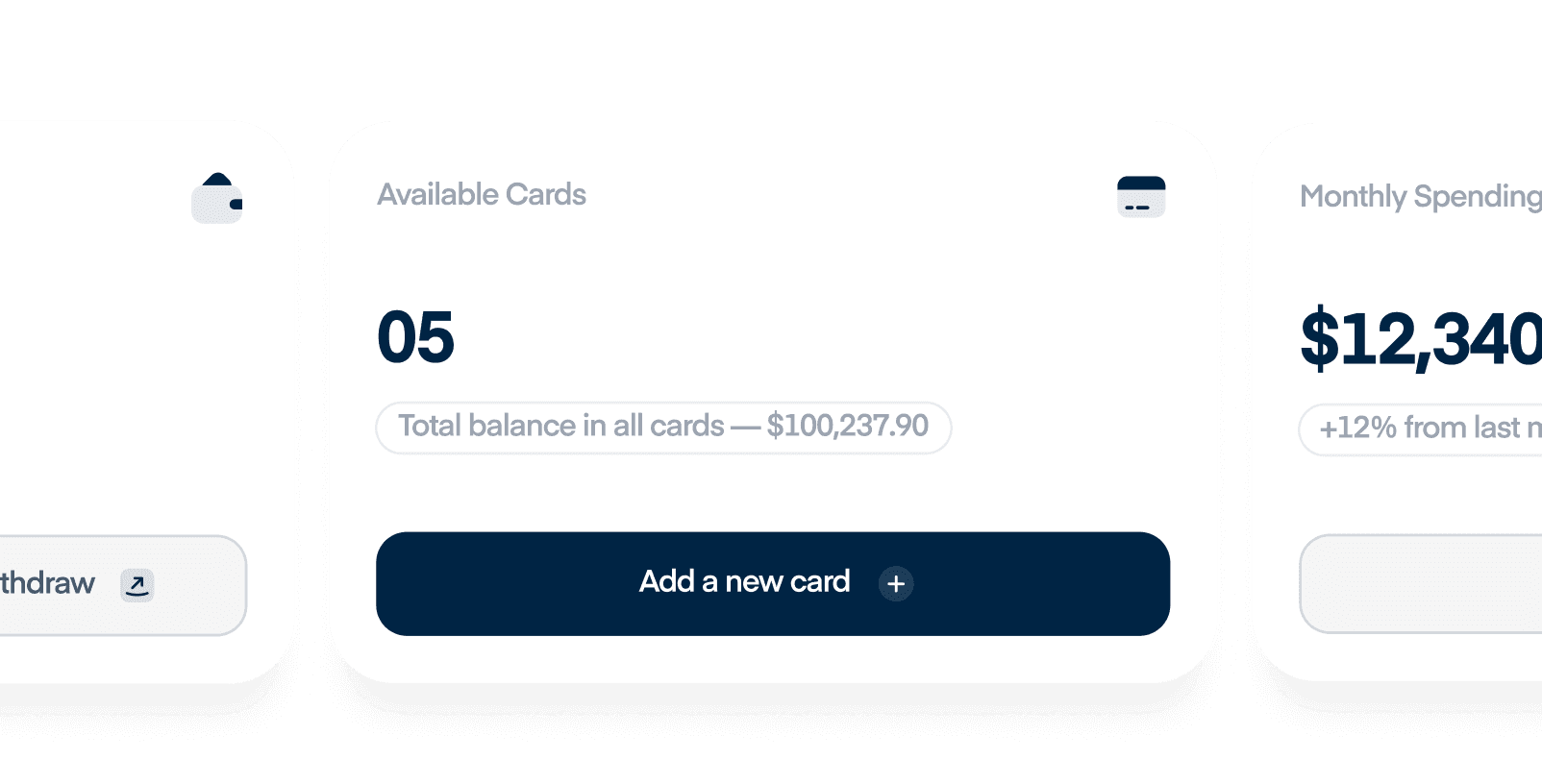
Manage Multiple Cards
Manage Multiple cards across teams and projects
Crypto funding


Fund in NGN, GHS, or Stablecoins

Team Cards
Assign cards to teams instantly
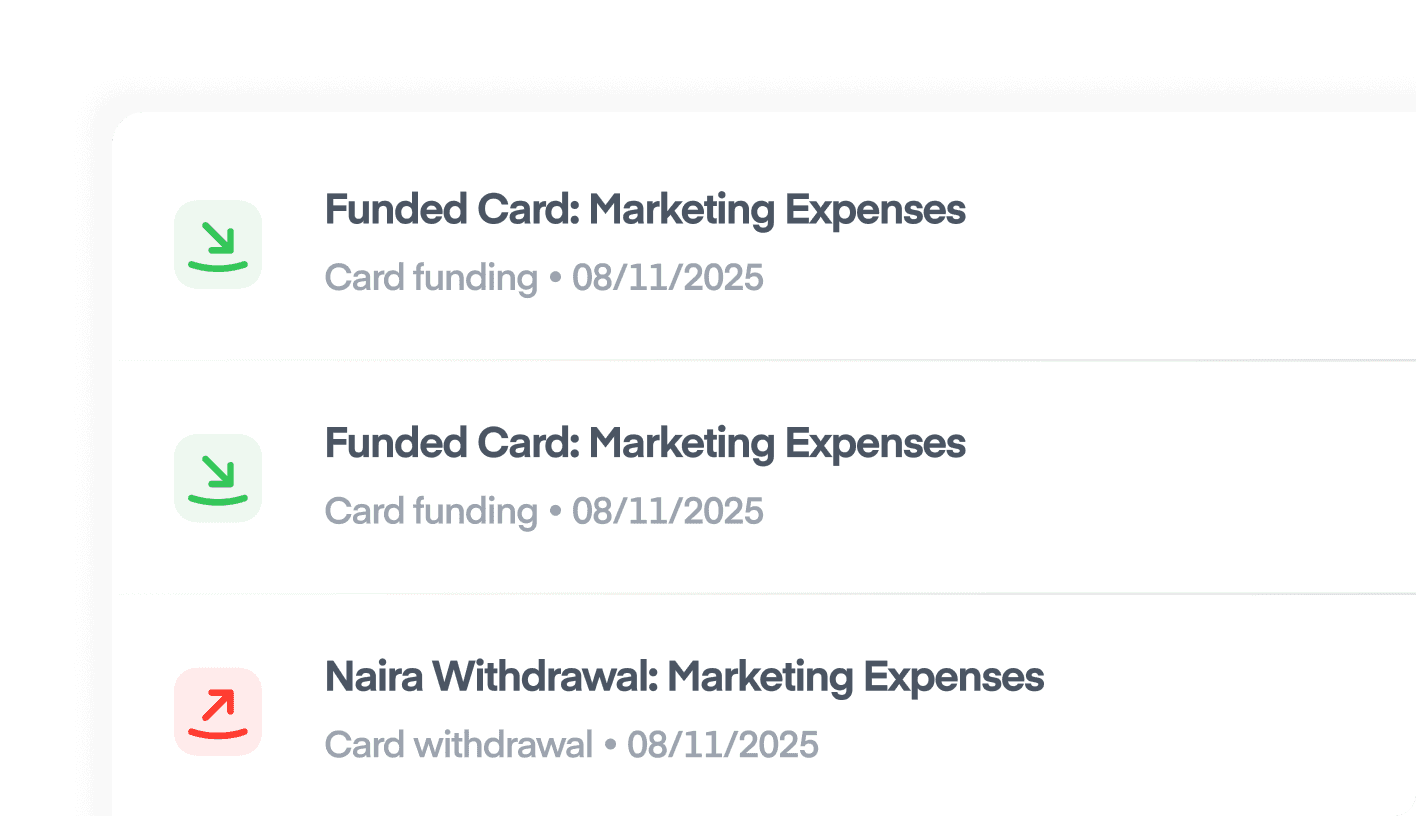
Expense Tracking
Track every expense in real time
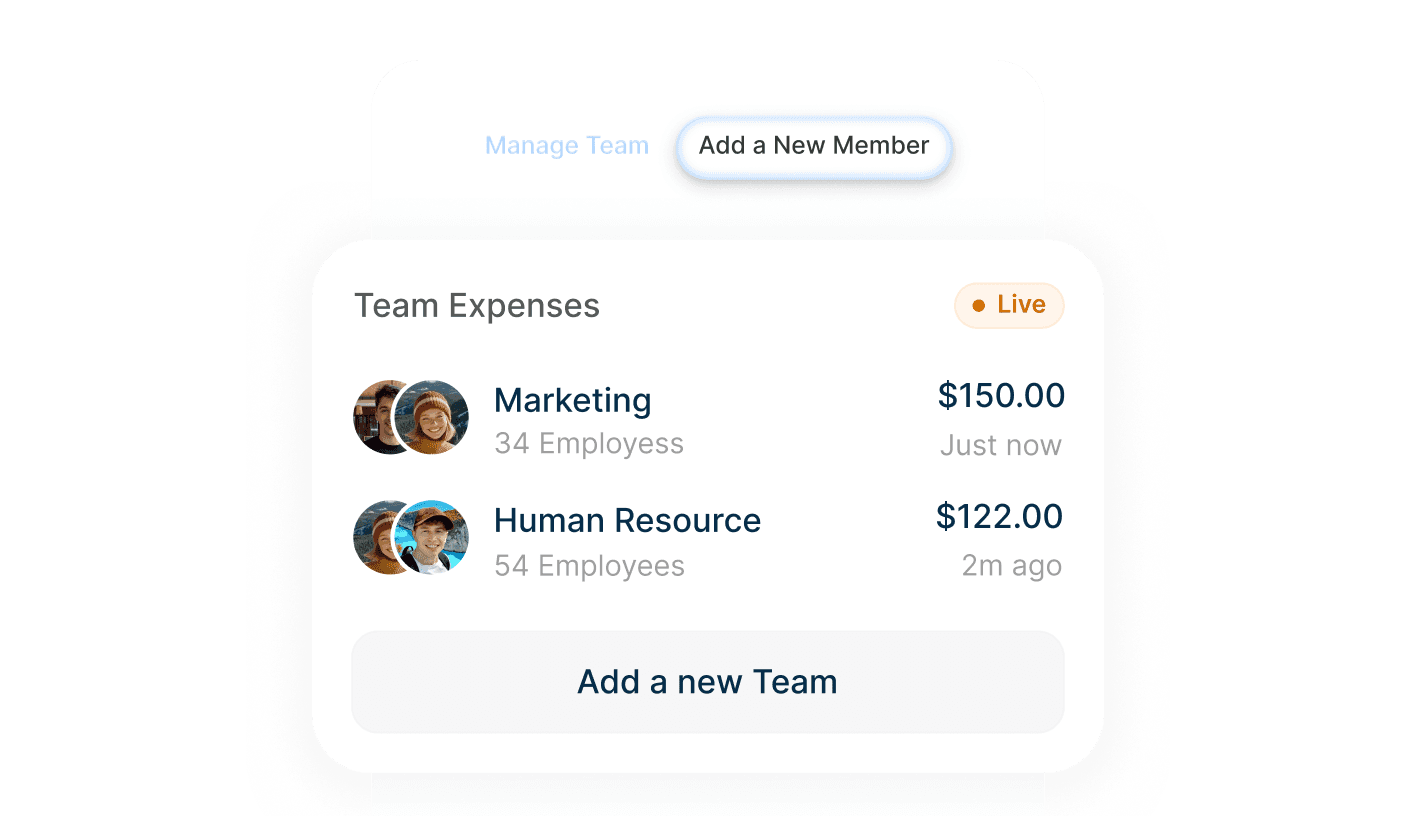
Team management
Full team management and spend oversight


Advertising