
The Business Spend Lifecycle Explained
The business spend lifecycle is the process a company follows from deciding what it needs to spend money on to approving, funding, making, tracking and reviewing the payment. It typically covers nine stages: planning, requesting, approval, funding, purchasing, tracking, reconciliation, analysis and optimisation. When these stages work together, businesses gain better insight into their spending, stronger control over company funds and better information for making future spending decisions.
8 Minutes

Businesses need to spend money to grow, but as spending becomes more distributed across teams, suppliers, payment methods and currencies, keeping track of it becomes increasingly difficult. Finance teams need control without creating unnecessary friction for the people responsible for getting work done.
The business spend lifecycle connects what happens before, during and after a payment, giving businesses a clearer view of how money is planned, approved, spent, tracked and evaluated.
In this guide, we'll cover:
What the business spend lifecycle means
Its nine stages
How the stages work together
How businesses can put the lifecycle into practice
What is the business spend lifecycle?
The business spend lifecycle is the broader process through which a company plans, authorises, makes, tracks, reconciles and evaluates its spending. Although businesses may structure the process differently, looking at spending as a lifecycle helps connect what happens before, during and after a payment.
The stages in this cycle are not necessarily separate or sequential in every business. In a smaller company, for example, the same person might request a purchase, approve it and make the payment, whereas a larger organisation may have procurement, finance and department heads involved at different points. At that scale, businesses often turn to enterprise spend management to coordinate procurement, financial controls, reporting and spending data across a more complex organisation.
What matters, ultimately, is recognising that individual transactions are not isolated events but interconnected parts of a broader spending process.
This broader view is also what distinguishes spend management from simply keeping records of expenses. While expense management is often concerned with documenting and reconciling money that has already been spent, spend management looks at how spending can be planned before the transaction happens, monitored while it happens and evaluated afterwards.
What a Well-Managed Spend Lifecycle Gives Your Business
When a business grows, spending tends to become more distributed. More employees gain access to company funds, more teams purchase software and services, more suppliers need to be paid, and more transactions take place across different accounts and payment methods. Without a defined process, that growth can make it increasingly difficult to answer basic questions about company spending.
A finance team might know how much money the business spent last month, for instance, without being able to determine exactly which teams were responsible for the spending or whether every transaction was necessary. Similarly, a company might discover that it has been paying for several unused subscriptions only after those subscriptions have renewed repeatedly.
The problem, therefore, is not necessarily that the business is spending too much. In many cases, the problem is that the business cannot see or understand its spending well enough.
A well-managed spend lifecycle gives businesses greater insight into where money is going while creating opportunities to check spending before it becomes a problem. It also produces better information for future decisions because the business can use its historical spending patterns to determine where budgets should be increased, reduced or reconsidered.
These benefits, however, depend on how well each stage of the spending process is managed. From the moment a business identifies a spending need to the point at which it reviews the resulting transaction, each stage presents an opportunity to improve visibility, strengthen governance and inform the decisions that follow. Understanding what happens at each stage, therefore, is essential to building a functional spend management process.
What are the stages of the business spend lifecycle?
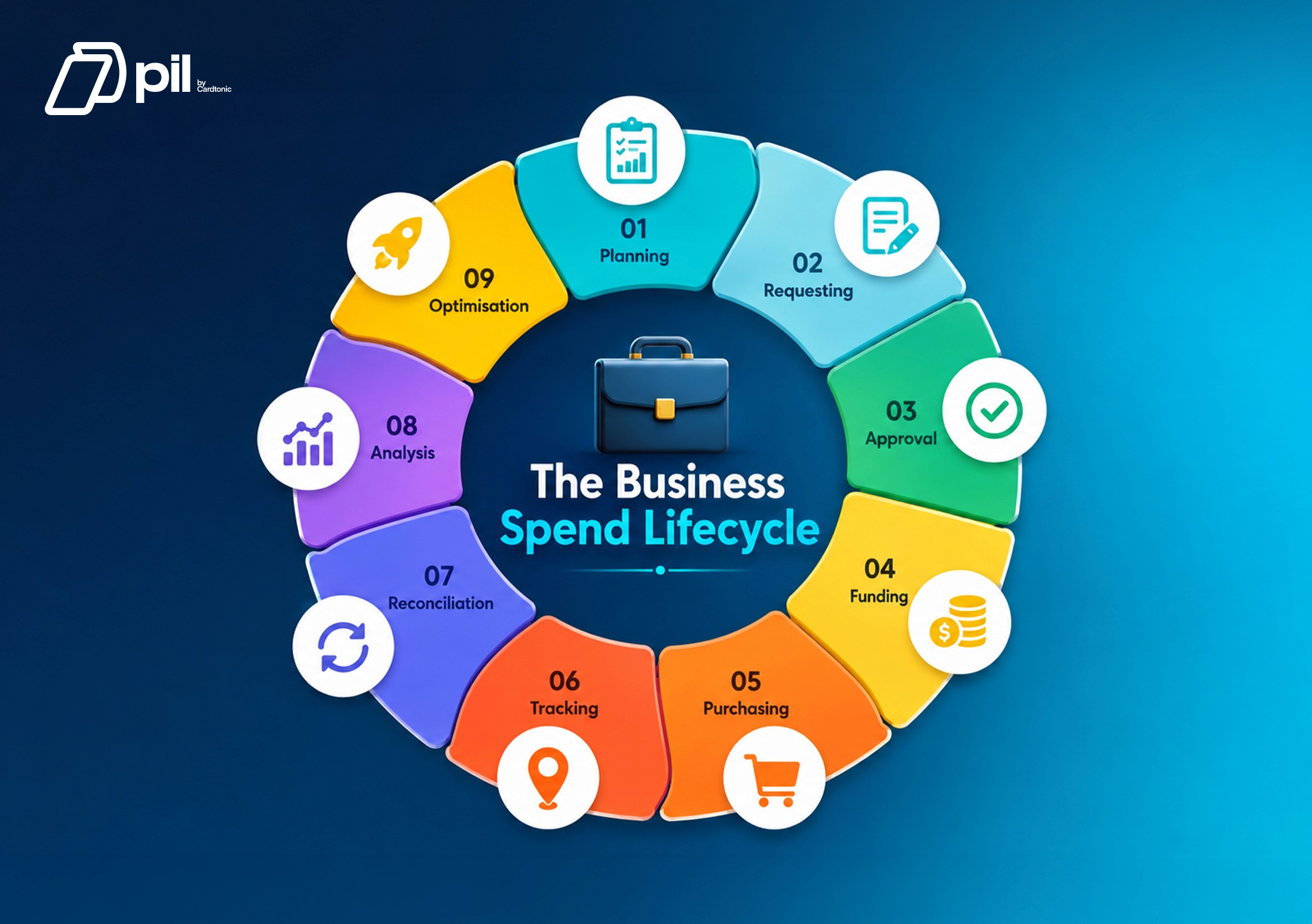
Although businesses structure their spending processes differently, most spending can be understood through these nine broad stages:
Planning: What does the business need to spend money on?
The lifecycle begins with a need. A marketing team may need to fund an advertising campaign, an engineering team may require additional cloud infrastructure, or a company may need to renew a software licence that its employees rely on every day. Whatever the situation, the business first needs to establish what it intends to spend money on and why that spending is necessary.
Planning is important because it gives spending a purpose before money is committed. Rather than discovering at the end of a month that a department spent more than expected, a business can establish budgets and expectations beforehand. If the marketing team has been allocated $10,000 for a campaign, for example, that figure provides a reference point against which subsequent spending can be considered.
At this stage, businesses can also determine whether a proposed purchase fits within their wider financial priorities. A purchase that appears reasonable in isolation may look very different when considered alongside the company's other commitments.
Requesting: Who needs to spend the money?
Once a need has been identified, someone has to initiate the spending process. In some organisations, this might involve submitting a formal purchase request. In others, an employee might contact the finance team or request access to a company card. Smaller businesses may have a much simpler process in which a department head communicates the need directly to whoever manages the company's finances.
Regardless of the mechanism, the business should be able to establish who wants to spend the money, what they want to purchase and what the purchase is intended to achieve.
That information becomes particularly important when multiple people are spending on behalf of the same company. Without clear ownership, it becomes harder for finance teams to determine who made a payment, what it was for and where the money ultimately went.
Approval: Should the business make the purchase?
An approval process allows the business to consider whether the purchase is necessary, whether it falls within the relevant budget and whether the person requesting the expenditure has the appropriate authority to make it.
The importance of this stage becomes clearer when we consider the alternative. If a company only checks spending after a transaction has taken place, it can identify an unauthorised or unnecessary purchase, but it can no longer prevent that particular payment from happening.
Effective spend management therefore introduces control before money leaves the business, rather than relying exclusively on retrospective checks. The complexity of the approval process should, however, reflect the size and needs of the business. A five-person company does not necessarily need a six-stage approval workflow for every software subscription, while a large organisation may require several levels of authorisation for significant purchases.
Funding: How will the purchase be paid for?
Depending on the nature of the purchase, the company might use a corporate card, a virtual card, a bank transfer or another approved payment method. What matters from a spend-management perspective is that the payment method should give the business an appropriate level of visibility. .
This is especially relevant when employees across different teams need to spend company money independently. Rather than giving everyone access to a single corporate card, a business might create separate spending arrangements for marketing, software, travel or other categories. It can then establish appropriate limits and assign responsibility to the people who actually need to make those payments.
This approach does more than separate transactions. It creates a connection between the money being spent and the purpose for which it was allocated.
Purchasing: Where does the transaction happen?
The purchasing stage is the point at which the business actually commits its money. Although the payment itself may take only a few seconds, the quality of the surrounding process determines how useful that transaction will be to the business later.
For example, knowing that a company spent $2,000 on a card is less useful than knowing that its marketing team spent $2,000 on a specific advertising campaign using a card that had been allocated to that purpose. The more information that remains attached to the transaction, the easier it becomes for the business to understand its spending afterwards.
Tracking: Where is the money going?
Once spending begins, businesses need a clearer view into what is happening in real time. This becomes increasingly important as the number of transactions grows. A company that has only a handful of monthly payments may be able to monitor them manually, but that approach becomes considerably harder when dozens of employees are making purchases across several teams and locations.
Suppose a company has allocated $5,000 to an advertising campaign. If the business can see that $4,200 has already been spent, it can make an informed decision about the remaining $800. If, however, that information only becomes available during the next financial review, the business may have little opportunity to intervene. This is why visibility is central to effective spend management: when businesses can see where their money is going in real time, they are better positioned to identify problems and act before they become costly.
Reconciliation: Does the spending match the records?
Reconciliation may involve matching transactions with invoices or receipts, assigning spending to the correct category, checking transactions against budgets and preparing information for accounting and reporting. Although this stage can appear administrative, it has a direct effect on the quality of a company's financial information. The administrative cost of fragmented spending data can become significant as a business grows. In a 2025 benchmark reported by CFO.com, half of finance teams said their month-end close took six or more business days, with fragmented data, reconciliation and manual errors among the factors contributing to the delay.
If finance teams have to spend hours determining what individual transactions were for, who made them and which department should be responsible for them, the business is paying for that lack of structure in the form of administrative time. A well-designed spending process reduces that uncertainty by keeping relevant information connected to transactions throughout the lifecycle.
Analysis: What does the spending tell the business?
Once spending has been recorded and reconciled, the business can begin to look beyond individual transactions and examine broader patterns. Perhaps software subscriptions have increased significantly over the past six months, or one department consistently spends more than its allocated budget. Advertising costs may be rising, even as the campaigns generate little or no improvement in results.
None of these patterns is particularly useful if the business cannot see them. Once spending data is organised, however, it becomes possible to ask more meaningful questions about how company resources are being used.
Optimisation: What should the business do differently next time?
The final stage of the lifecycle brings the process back to planning. Once a business understands its spending patterns, it can use that information to make better decisions about future spending. It might renegotiate a supplier contract, cancel an unused subscription, change a department's budget or adjust the spending limit attached to a particular card.
This is why the business spend lifecycle is better understood as a loop rather than a straight line. The business plans its spending, makes the purchase, monitors and evaluates the transaction, and then uses what it has learned to improve its next spending decision. In this sense, the end of one spending cycle becomes the starting point for the next.
A practical example of the business spend lifecycle
Consider a Nigerian marketing agency that has decided to spend $3,000 on advertising for a new client campaign.
The process begins when the agency determines that the campaign requires a $3,000 advertising budget. Once the budget has been agreed upon, the campaign manager requests access to the funds and receives the necessary approval.
Rather than giving the campaign manager unrestricted access to the company's general funds, the agency could allocate a dedicated card to the advertising activity and set an appropriate spending limit.
As the campaign manager purchases advertising, the agency can monitor the transactions and see how much of the allocated budget has been used. When the campaign ends, the transactions can be reviewed and reconciled, allowing the agency to determine how much it actually spent and how that spending performed.
The agency can then use what it has learned to make a better decision about its next campaign.
What appears on the surface to be a simple advertising payment is therefore part of a much larger process that begins with planning and ends with optimisation.
How PIL fits into the business spend lifecycle
For businesses that need to give teams access to company money without giving up control, PIL provides a tool for managing the payment and monitoring stages of the spend lifecycle.
With PIL, businesses can create virtual cards for different spending needs, assign cards to the people responsible for making payments and establish spending limits that reflect the purpose of each card. Because transactions can be monitored from a central platform, finance teams have greater insight into how company funds are being used.
This becomes particularly useful when a business has several people making payments independently. Instead of relying on a shared card and trying to work out who spent what afterwards, the company can create a clearer relationship between the person, purpose, limit and transaction.
PIL supports businesses in making USD payments while funding their accounts in NGN, GHS or stablecoins, making it possible to manage certain international business payments without treating every transaction as a separate financial process.
The broader objective is simple: businesses should be able to give their teams the money they need to get work done while maintaining visibility and governance over how that money is used.
Use PIL to build a functional spend management system for your business.
Frequently Asked Questions
What is the business spend lifecycle?
The business spend lifecycle is the complete process through which a company plans, requests, approves, funds, makes, tracks, reconciles, analyses and optimises its spending. Rather than treating individual payments as isolated transactions, the lifecycle connects each stage so that businesses can establish clearer boundaries around how their money is used.
Why is the business spend lifecycle important?
A structured spend lifecycle helps businesses understand where their money is going, establish clear spending authority and make better spending decisions. When spending is visible from the point of planning through to reconciliation and analysis, finance teams can identify problems earlier and use spending data to inform future budgets and decisions.
What is the difference between the business spend lifecycle and expense management?
Expense management generally focuses on recording, submitting, approving and reconciling expenses, particularly after they have occurred. The business spend lifecycle takes a broader view by considering what happens before a payment is made, including planning, requesting, approval and funding, as well as what happens afterwards through tracking, analysis and optimisation.
What is the difference between the business spend lifecycle and procure-to-pay?
Procure-to-pay (P2P) generally covers the purchasing and payment process, including activities such as ordering, receiving and reconciliation, and invoicing and payment. The business spend lifecycle takes a broader management view, beginning with the decision to spend and continuing through tracking, analysis and optimisation. P2P can therefore form part of the broader spend lifecycle rather than serving as an alternative to it.
How can businesses improve their spend lifecycle?
Businesses can improve their spend lifecycle by establishing clear spending policies, assigning ownership to transactions, setting appropriate spending limits and giving finance teams timely visibility into company spending. Regularly reviewing transaction data can also help businesses identify unnecessary costs, budget overruns and other patterns that should influence future spending decisions.
Can small businesses benefit from spend management?
Yes. Although larger organisations may have more complex procurement and approval processes, small businesses also benefit from knowing who is spending company money, what the money is being spent on and whether spending remains within the company's financial priorities. A simple, well-designed process can provide this oversight without creating unnecessary administrative work.
How does PIL support the business spend lifecycle?
PIL helps businesses manage key parts of the spend lifecycle by providing tools for funding, making and monitoring business payments. Businesses can create virtual cards for different spending needs, assign them to the people responsible for making payments and establish spending limits, while transaction insight helps finance teams understand how company funds are being used.
Author
Ayodeji Falaye
More Stories


Because payments shouldn’t hold your business back

Intuitive Navigation
Intuitive navigation: access anything in seconds
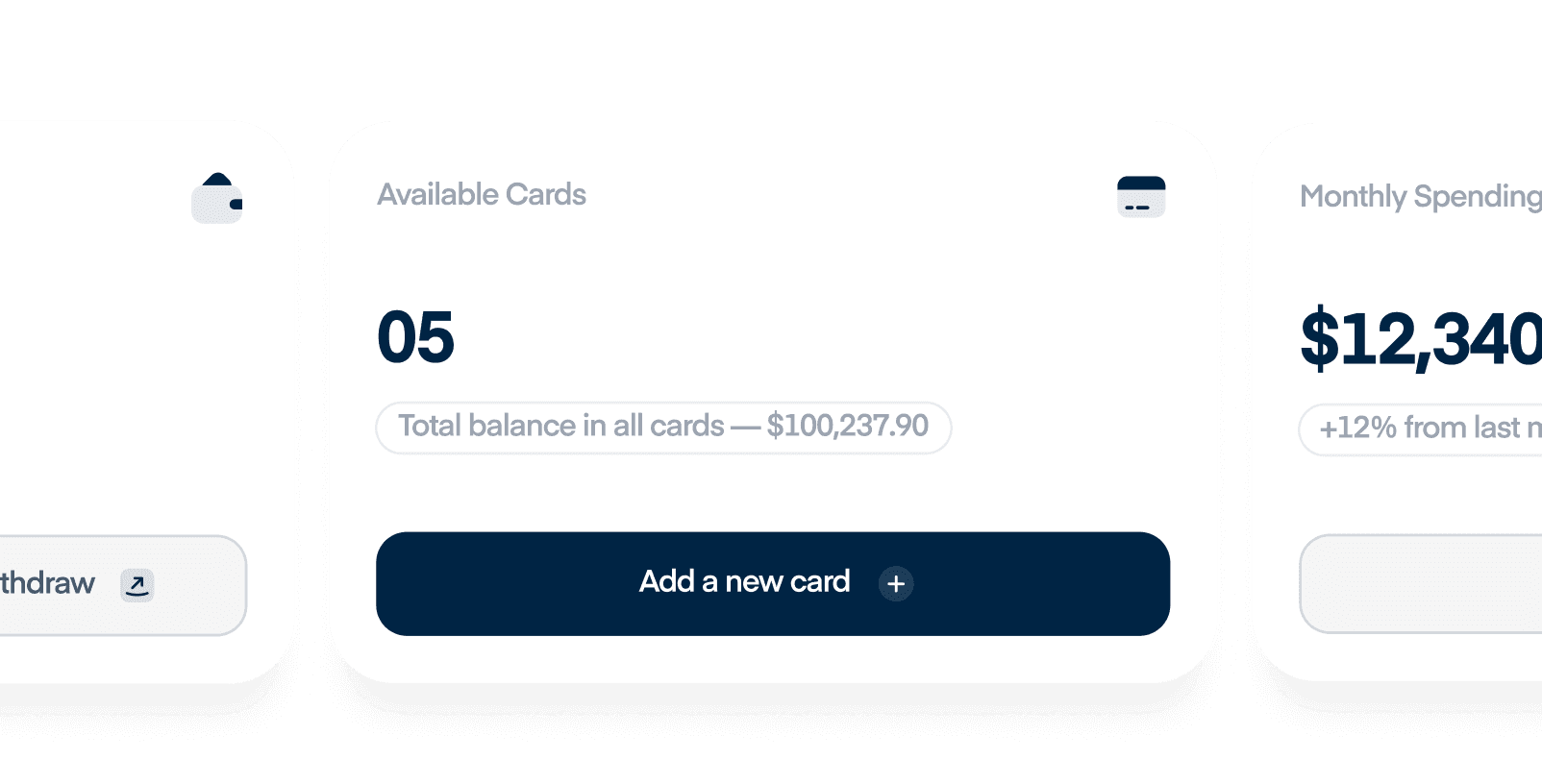
Manage Multiple Cards
Manage Multiple cards across teams and projects
Crypto funding


Fund in NGN, GHS, or Stablecoins

Team Cards
Assign cards to teams instantly
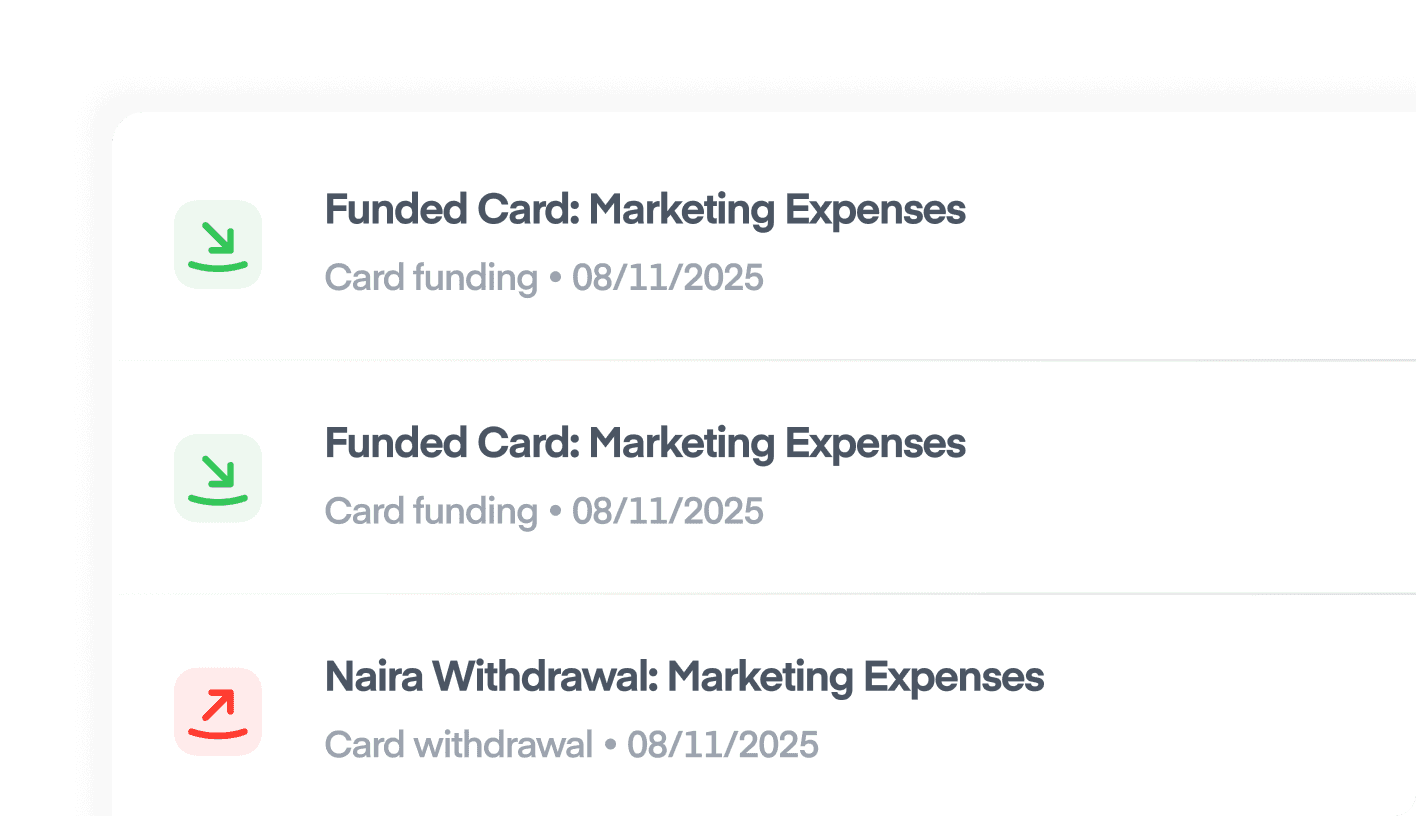
Expense Tracking
Track every expense in real time
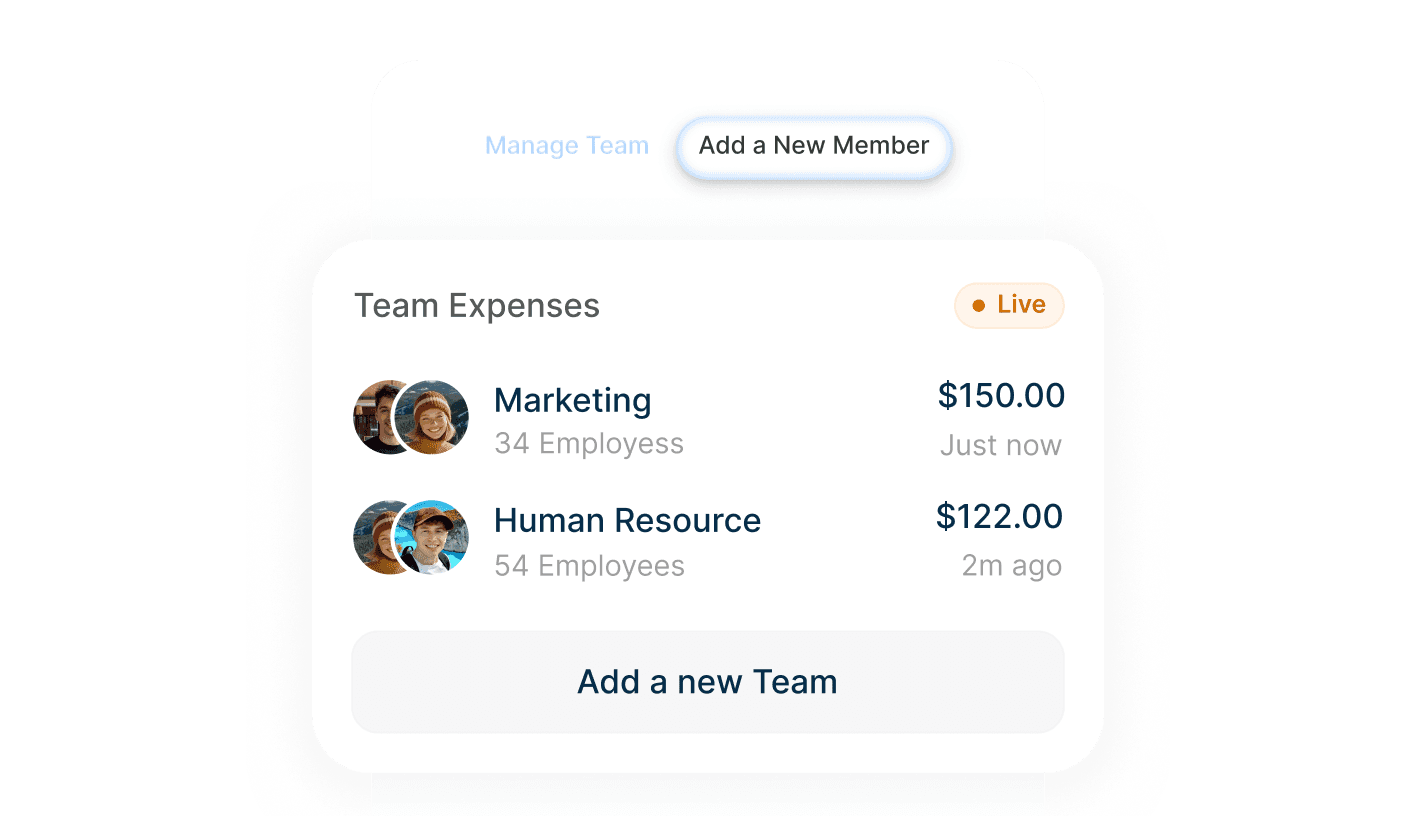
Team management
Full team management and spend oversight


Advertising