
How to Build a Business Spend Management Process
Build a spend management process that controls approvals, payments, funding, and reporting while keeping business spending flexible and efficient.
9 Minutes

Business Spend Management Process
What a Functioning Spend Management Process Looks Like
Spend management used to mean spreadsheets and manual tracking. At small scale, it’s quite workable, but becomes slow and error-prone as a business grows. The shift toward dedicated systems for procurement, payables, and employee expenses came later, as automation made it possible to manage spend with far less manual work
It’s better understood in a real use case scenario. Consider a 15-person digital agency that has built it properly:
The agency has five virtual dollar cards on PIL: one for Meta Ads, one for design tools (Figma, Adobe), one for project management and communication tools (Notion, Slack, Zoom), one for cloud infrastructure, and one for freelancer payments. Each card is funded at the beginning of the month, based on the previous month's spend plus a buffer, and any top-up beyond that initial funding requires approval from the finance lead before the funds move. The marketing manager can top up ad cards without founder approval, as long as the amount stays under a defined threshold, but anything above that threshold routes to the founder for sign-off.
The finance lead can see every transaction across all seven cards in real time from the PIL dashboard. At month-end, she exports seven statements (on per card basis), and has a complete, accurate, categorised record of every naira equivalent the agency spent in dollars that month. The reconciliation takes 20 minutes.
In three months, the founder hasn't had to manually approve a single routine payment, the finance lead hasn't spent four days on month-end reconciliation once, and no campaign has been paused because of a card failure. That is what a functioning spend management process produces. It gives control, clarity, and the freedom to focus on the work instead of the infrastructure underneath it.
So, how do you build a system to achieve something similar?
6 Steps To Building A Functional Business Spend Management Process
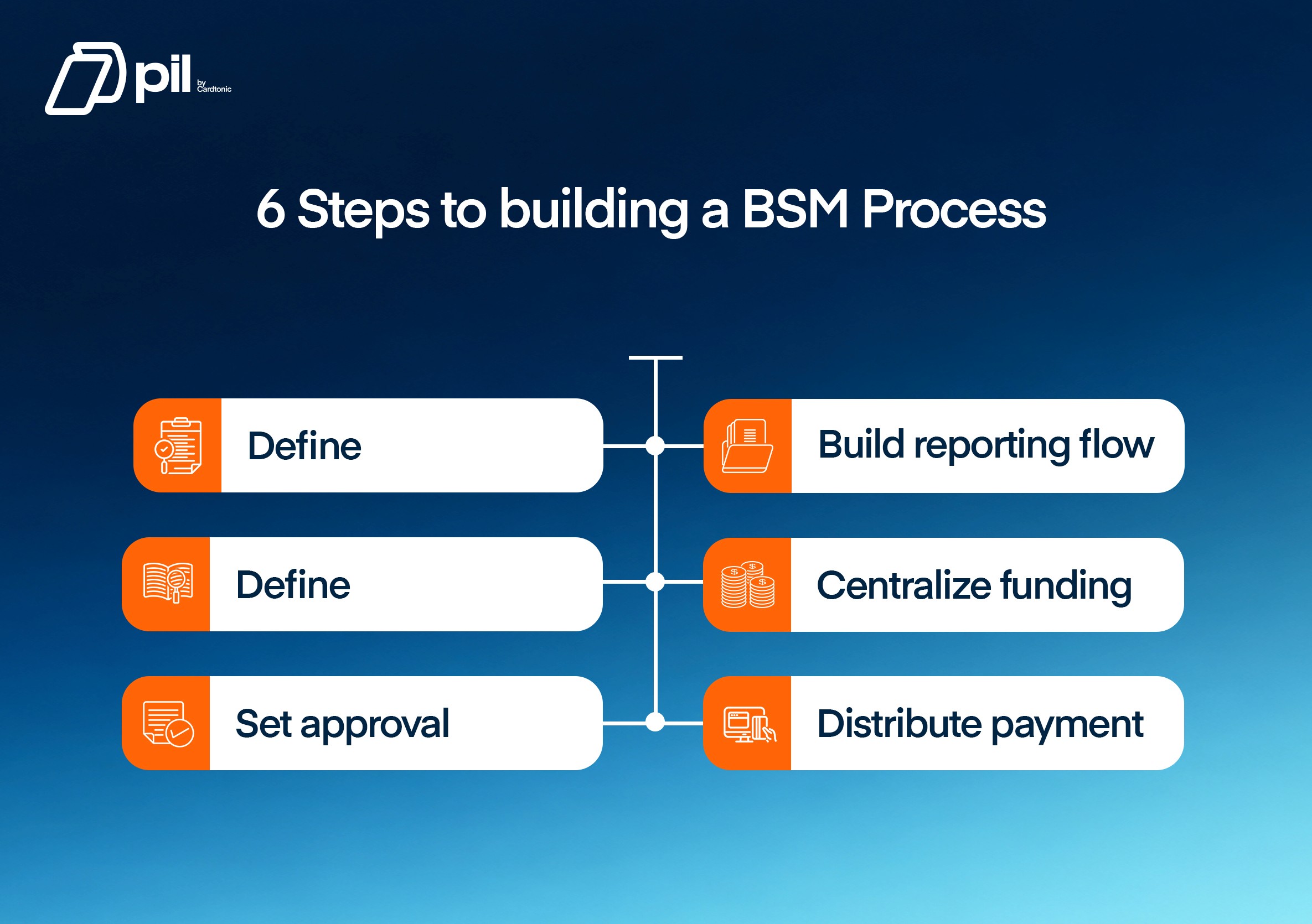
Step 1: Audit what you're already spending, and how
You can't design a system for spending you haven't mapped. Pull the last three to six months of transactions across every card, account, and reimbursement request. Sort them into categories: vendor payments, software subscriptions, ad spend, travel, team welfare, contractor payments, or whatever applies to your business.
Two things should jump out immediately. First, payments nobody remembers approving. Second, spend that's recurring but was never set up as a formal budget line. Flag both immediately as they're the small items a good process needs to catch later.
Step 2: Define spend categories and assign an owner to each
For every category from your audit, name the person or role responsible for it. Marketing might own ad spend, ops owns vendor payments, HR or team leads own welfare and reimbursements.
Ownership gives you someone to ask when a strange charge shows up. It also gives that person the authority to actually manage the budget, instead of routing every decision back to a single founder or finance lead who becomes the bottleneck for everything.
Step 3: Set approval workflows that match the size of the spend
Not every expense needs the same scrutiny. A $15 software renewal and a $5,000 vendor contract shouldn't go through the same approval chain. If they do, one of two things happens: small spend gets stuck waiting on people with better things to do, or large spend slips through because everyone's used to rubber-stamping.
Finance leaders consistently report that clear, tiered approval limits are what actually reduce both bottlenecks and financial risk. That is why a workable structure uses tiers: spend under a set threshold is pre-approved within a category budget and needs no sign-off; spend above that threshold needs one approval; anything past a second, higher threshold needs a second sign-off. The exact numbers depend on your business size, but the general principle is that approval effort should scale with risk, not apply evenly to everything.
Step 4: Distribute payment methods, not access to one account
This is where a lot of businesses get stuck. The default is one company card, or one bank account, shared across everyone who needs to spend. It works until it doesn't. Shared access means shared blind spots: nobody can tell whose transaction is whose, limits apply to the whole card instead of the person or project using it, and a single compromised card takes down every team's spending at once.
The fix is giving each category, team, or project its own payment method, with its own limit attached: a marketing card that can't exceed the monthly ad budget, a transport card for sales staff that tops up weekly, and a welfare card with a fixed monthly ceiling. When the card enforces the limit, you don't need to trust everyone to remember it.
Step 5: Centralize funding, especially if you're spending across currencies
If your business pays in more than one currency, including stablecoins (and most growing African businesses eventually do) funding needs to be simple, or your team will find workarounds that break the whole process. That means one wallet, funded from local currency or stablecoins, converted at a visible rate, used to fund individual cards from a single source.
Nigerian businesses are increasingly turning to dollar-pegged assets to get around FX scarcity and naira volatility, which is exactly the funding-and-conversion problem this step solves for.
Step 6: Build reporting into the flow, not onto it
The test of a good spend management process is simple: can you generate a clean report in minutes, without asking anyone to explain a transaction from three weeks ago? If the answer is no, the process isn't finished yet.
Organizations that digitize routine spend workflows (approvals, reconciliation, reporting) see meaningful gains in speed and reduce hands-on administrative work, freeing finance to focus on higher-value decisions. It avoids the task of reporting being a month-end scramble. It should be a byproduct of how spend already happens. You can set a review rhythm too weekly for high-spend categories, monthly for everything else, so problems get caught while they're still small.
What kind of spend management process does your business need right now?
You don't need the same level of spend control at every stage of growth. A five-person company with a handful of recurring expenses can run a simpler process than a 50-person company with multiple teams, currencies, and dozens of vendors.
Start by looking at how your business spends today via any of these categories:
If most spending runs through one company card or account:
Start by separating spending by category, team, or project. Give each one a defined owner and a payment method with its own limit. This makes it easier to see where money is going without giving everyone access to the same pool of funds.
If founders or finance leads approve almost every payment:
You are likely at the stage where your process needs clearer approval thresholds. Pre-approve routine spending within a defined budget and reserve manual approval for expenses that carry more financial risk.
If your team regularly runs out of card funds or has payments declined:
You need a funding process that matches how each category spends. Set limits based on expected spend, review them regularly, and create a clear process for requesting additional funds when necessary.
If finance spends hours reconciling transactions at month-end:
Your reporting needs to move closer to the point of spending. Use categorized payment methods, clear ownership, and transaction-level visibility so reporting is produced by the process rather than reconstructed afterward.
If your business spends across currencies:
You need a process that separates funding and currency conversion from individual spending decisions. A centralized wallet can fund dedicated payment methods while keeping the local-currency cost of dollar spending visible.
What Breaks a Spend Management Process
A few things may undo the progress after you bin a proper spend management process:
Letting exceptions become the norm. Every "just this once" approval outside the process makes the next one easier to justify, until the process is just a document nobody follows.
Ignoring the small recurring costs. Team welfare, transport reimbursements, and occasional gifts feel too minor to formalize, but they add up, and they're often the least visible line items when something goes wrong.
Treating the process as a one-time setup. Businesses change. New teams spend differently than old ones. Revisit categories, thresholds, and ownership every couple of quarters, not just when something breaks.
None of this requires a ten-person finance team. A tool that offers proper expense categorization, gives team access with specific card owners, clear approval routes, payment methods that enforce limits, and easy-to-generate reports suffices.
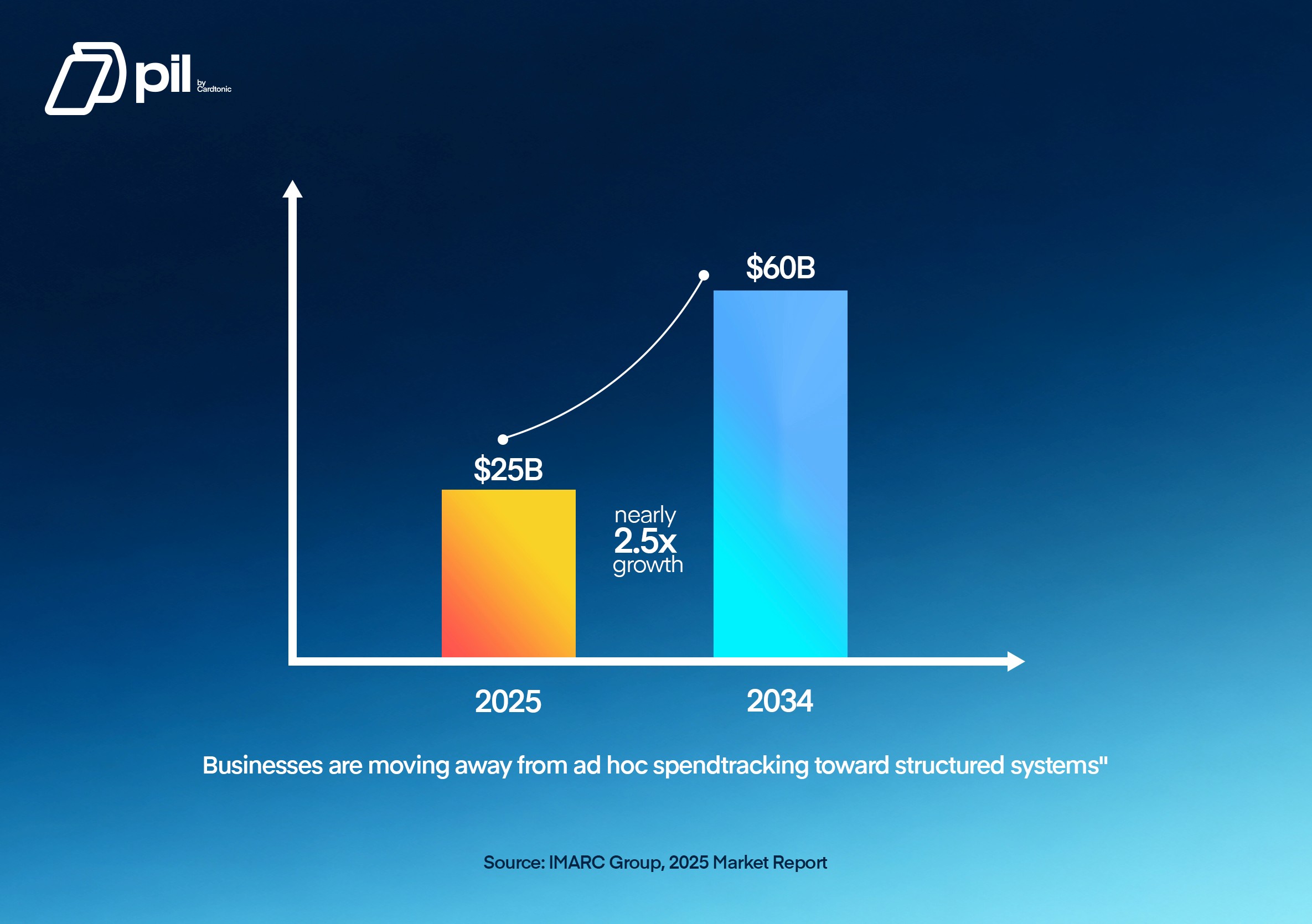
The market for spend management tools is growing at a compound annual rate of nearly 10%, on track to more than double in size by the mid-2030s. That trajectory reveals how businesses of every size are moving away from ad hoc spend tracking toward structured systems. Are you on board or still going the traditional way?
Frequently Asked Questions
How long does it take to build a spend management process? The audit and category definition can be done in a day. Setting up dedicated payment methods and approval workflows takes another day or two. The first full monthly cycle, from budget-setting to month-end reporting, is where the process proves itself. Most businesses that build this properly see the benefit within the first month.
How many virtual cards does a business need? It depends on the number of distinct spending categories and teams. A practical starting point is one card per major category: marketing, software, cloud infrastructure, vendor payments. As the business grows and categories multiply, cards can be added. PIL supports up to eight cards for business accounts, which is enough for most businesses at the growth stage.
What happens when a card hits its limit? The card stops accepting charges. This is by design. The team member requests a top-up, the designated approver signs off, and the card is funded again.
How do I handle multi-currency spending on PIL? Fund your PIL wallet in Naira, Cedi, or stablecoins, and spend in dollars from your virtual cards. This separates the currency conversion from the spending decision. Exchange rates apply at the point of wallet funding, not at the point of spending, which gives you predictability on what your dollar budget actually costs in local currency.
Do I need a dedicated finance team to run this? No. This process is designed to work for a business with a part-time finance function, or a founder who handles finance alongside other responsibilities. The PIL dashboard provides the visibility and reporting that would otherwise require a full-time finance team to produce manually.
No spend management process is ever really "finished." The categories, thresholds, and approval chains that work for a 15-person team won't be the ones that work when that team grows to 50. What matters is building something that can flex with you, so financial discipline doesn't come at the cost of speed.
That's the gap PIL is built to close: one platform for multi-currency wallets, virtual cards, approvals, and reporting, so your infrastructure keeps pace with your process.
Use PIL to build a functional spend management system for your business.
Author
Ayodeji Falaye
More Stories


Because payments shouldn’t hold your business back

Intuitive Navigation
Intuitive navigation: access anything in seconds
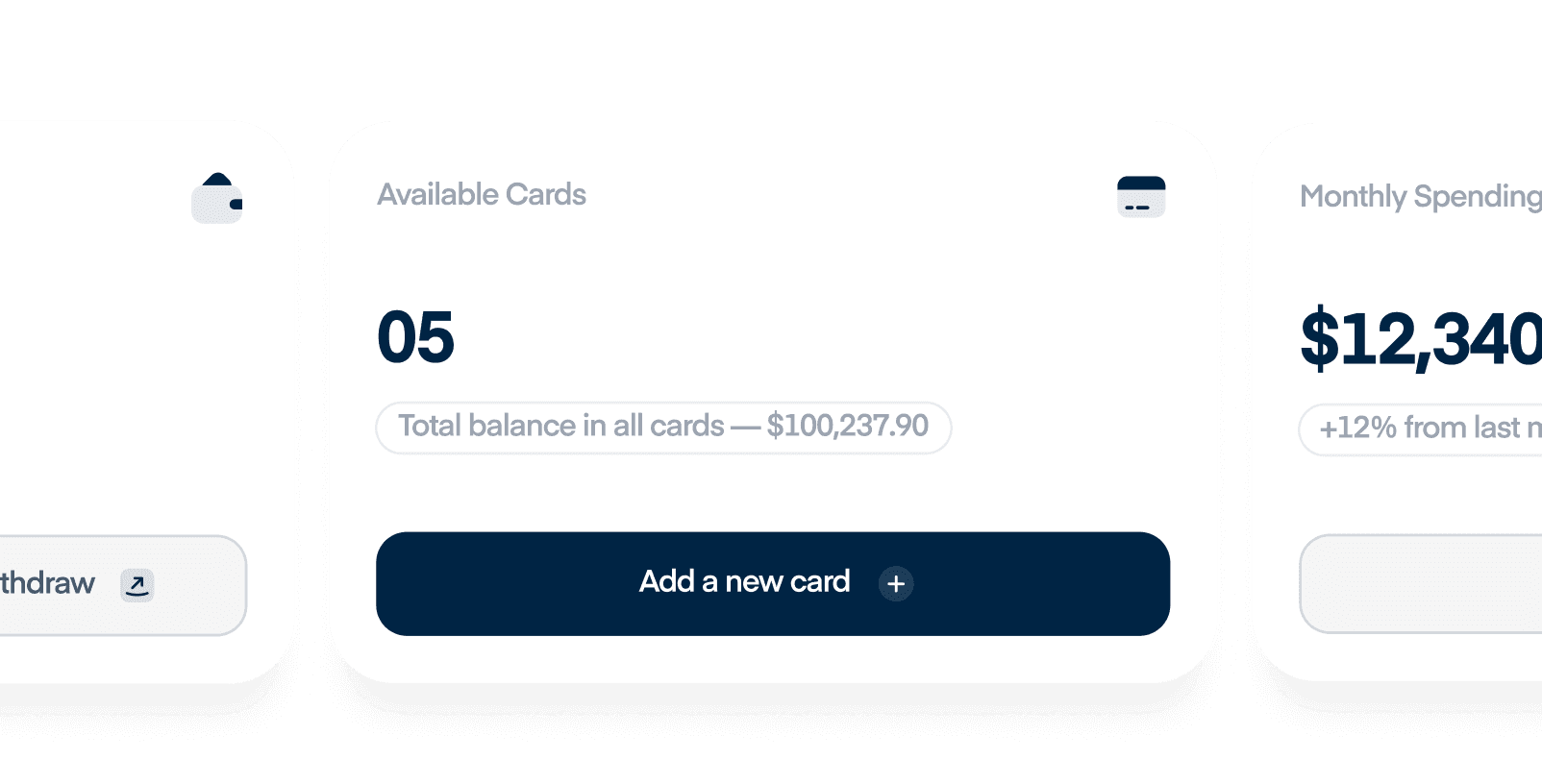
Manage Multiple Cards
Manage Multiple cards across teams and projects
Crypto funding


Fund in NGN, GHS, or Stablecoins

Team Cards
Assign cards to teams instantly
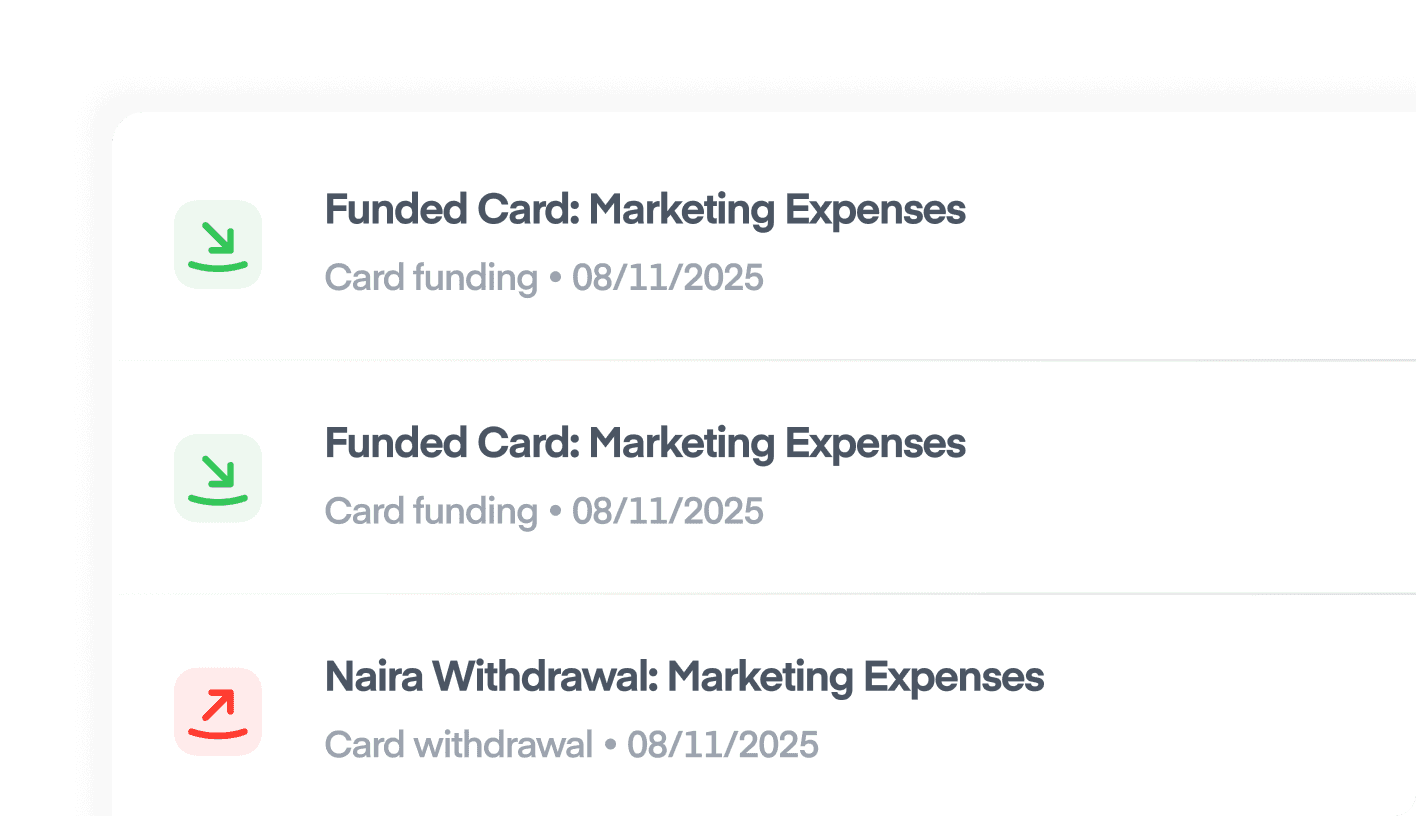
Expense Tracking
Track every expense in real time
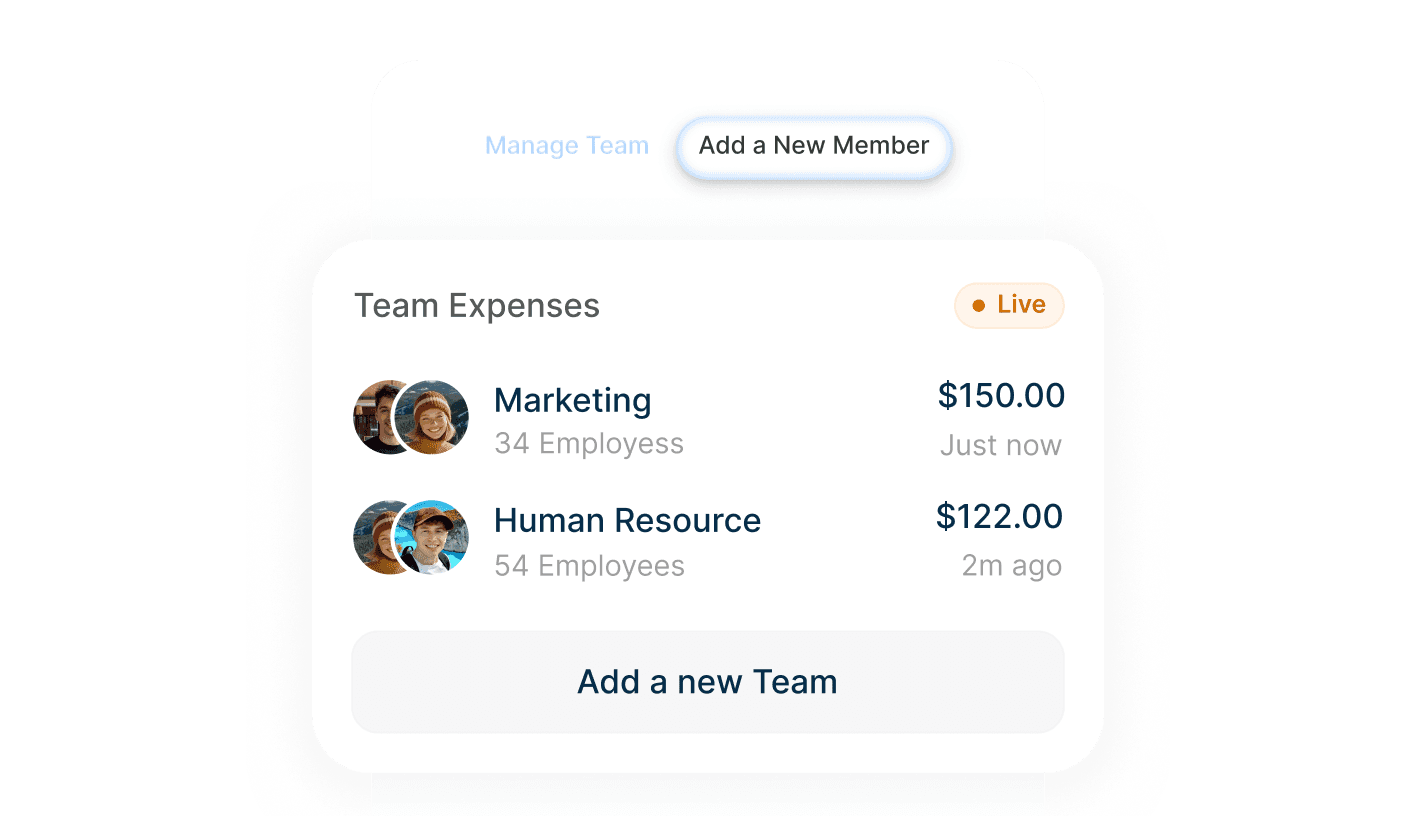
Team management
Full team management and spend oversight


Advertising