
Top Business Spend Management Platforms: A Guide for African Businesses
Compare the top spend management platforms for African businesses, their strengths and limitations, and why local currency funding and global card acceptance matter.
8 Minutes

Top Business Spend Management Platforms
Top 8 Business Spend Management Platforms for African Businesses
PIL (by Tonic Technologies)
Best for: African businesses that run ads, pay for SaaS tools, manage distributed teams, and need card-based spend management that allows global spending.
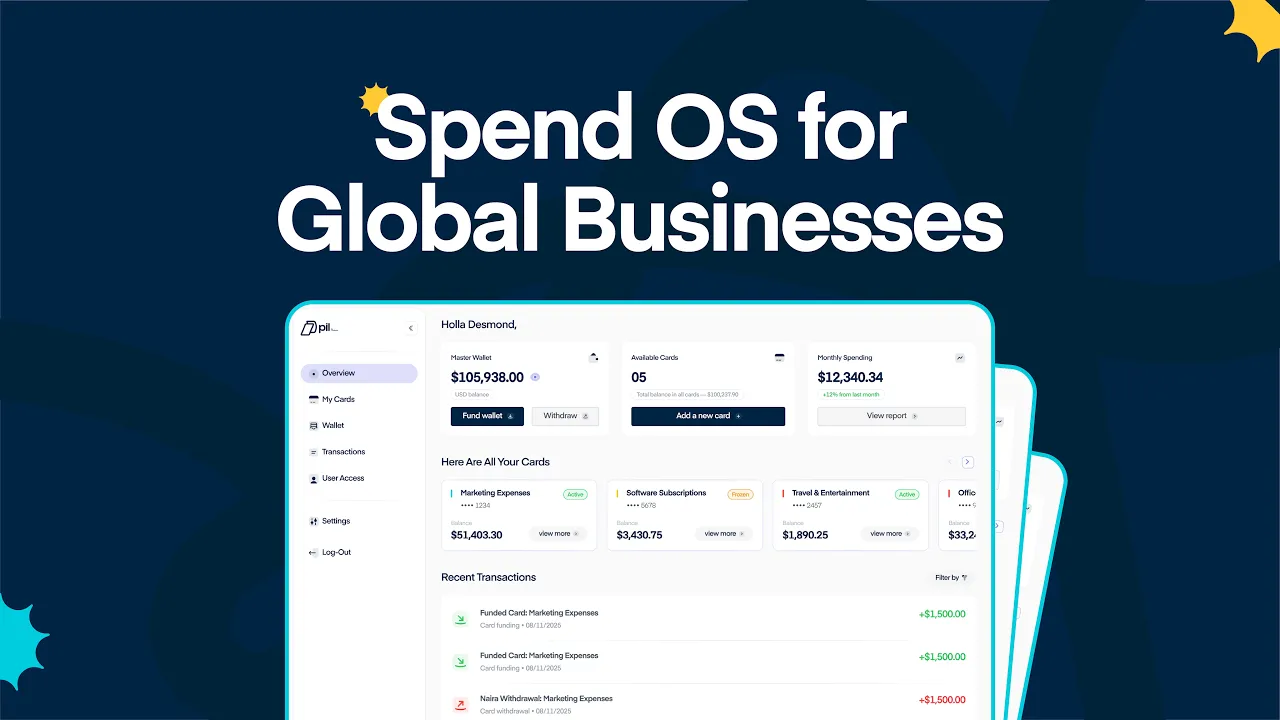
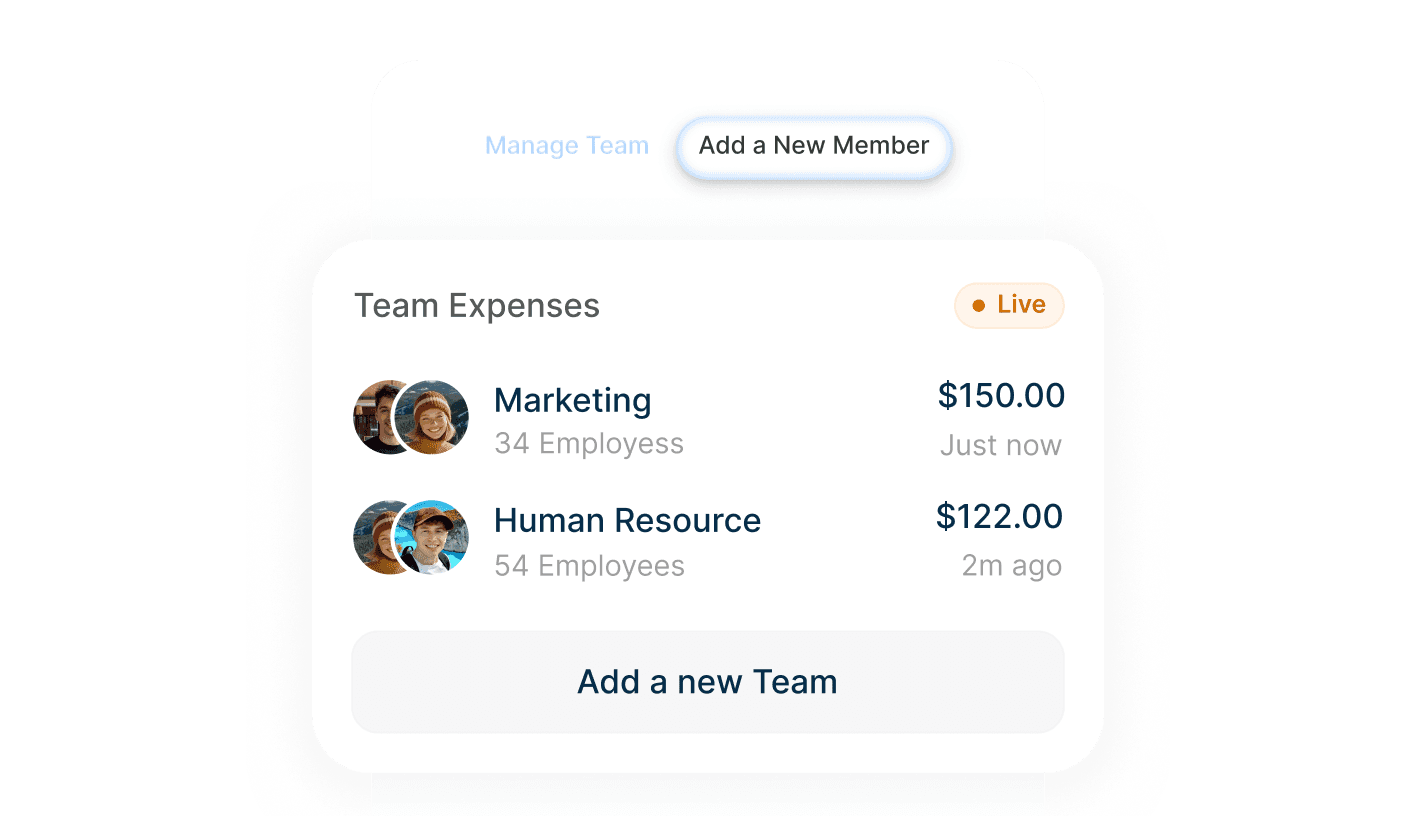
(PIL Dashboard screenshot)
PIL is a business spend management platform built specifically for African businesses, designed from inside the problem rather than adapted from a platform built for another market. It emerged from Tonic Technologies’ own experience managing business payments across its portfolio of products, and was built to solve the infrastructure challenges that most global platforms assume.
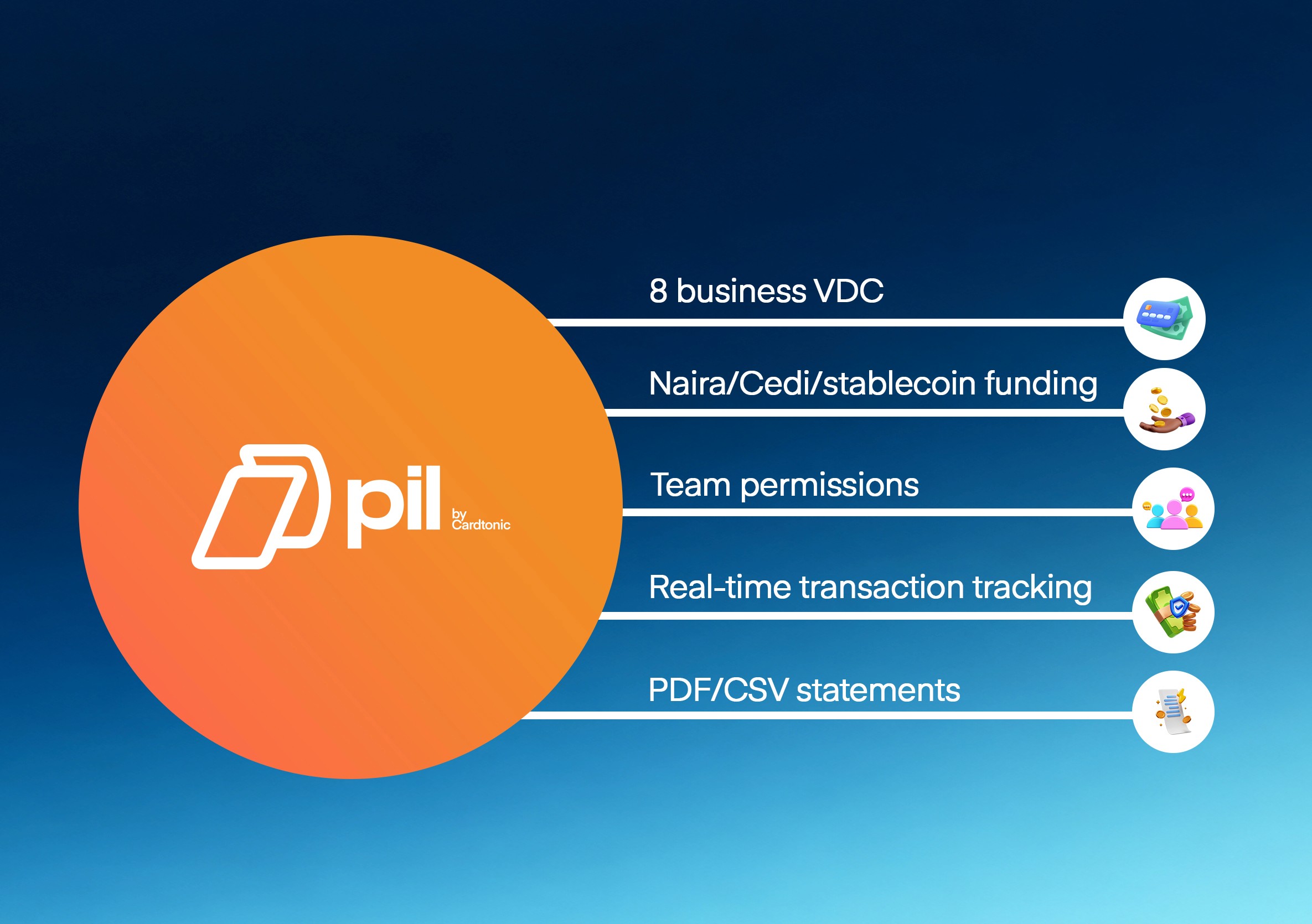
With PIL, businesses can create up to 8 virtual dollar cards, each labelled by purpose, funded with its own limit, and managed from a single dashboard. The wallet accepts funding in Naira, Cedi, or stablecoins (USDT/USDC), and cards are accepted on all major global platforms including Google Ads, Meta Ads, LinkedIn Ads, TikTok Ads, AWS, Slack, Adobe, and other major tools, including recurring billing and threshold-based charges.
Team access is structured by role: owners and admins approve card funding requests, finance leads have full reporting visibility, and team members use their assigned cards within defined limits. Every transaction is logged in real time, and per-card statements are exportable as PDF or CSV on demand. There are zero fees on card usage
PIL’s specific strength is the intersection of local currency funding, global card acceptance, and team-level spend controls, which are three infrastructure requirements that most growing African businesses have and that most global platforms were not designed to meet simultaneously.
Ramp
Best for: US-based or US-entity businesses with a significant volume of team spending.
Ramp is one of the most fully featured spend management platforms available. Ramp puts real-time control and automation front and center, issuing unlimited virtual and physical cards, tracking spend across departments, and enforcing policies before money goes out the door. Its AI-powered expense categorisation, savings insights, and accounting integrations make it a compelling option for businesses that operate primarily in dollars and have access to US banking infrastructure.
However, Ramp works best for companies with US entities, US bank accounts, and USD-denominated operations. For a Lagos or Accra-based startup paying for tools in dollars from a Naira or Cedi account, the funding infrastructure Ramp assumes simply does not exist. It is an excellent product built for a different operating environment.
Expensify
Best for: Small businesses and freelancers that need simple receipt capture and expense reimbursement.
Expensify is built around receipt capture and reimbursements, with simple workflows that suit small businesses and freelancers. It is one of the most widely used expense management tools globally, and its ease of use is its strongest selling point.
Expensify is an expense management tool first and a spend management platform second. It handles the reimbursement layer well but does not provide the card issuance, team spending controls, and real-time dashboard visibility that a full spend management system requires. For African businesses that have already outgrown informal expense tracking but are not yet ready for a full corporate card programme, Expensify sits in an awkward middle ground.
It also does not natively support Naira accounts or Nigerian bank integrations, which limits its utility for businesses whose primary financial infrastructure is local.
Spendesk
Best for: European businesses managing team spend across multiple departments.
Spendesk is an all-in-one spend management solution with strong adoption in Europe, providing centralized control while giving employees flexible payment options: physical and virtual cards with customizable limits, expense validation workflows, and customizable approval processes.
Spendesk’s multi-entity and multi-currency support is well suited to businesses operating across European borders and currencies. Its dashboards give finance teams strong real-time visibility without overcomplicating the user experience for team members making routine purchases.
The platform’s primary limitation for African businesses is geographic. Its infrastructure, card rails, and banking integrations are built for European operations. An African business trying to use Spendesk would face the same structural gap as with Ramp: funding in local currency, card acceptance on African-relevant platforms, and local banking integrations are not part of the product’s design.
Brex
Best for: Venture-backed US startups with high spending volume.
Brex pioneered the corporate card programme for startups. It issues cards based on funding and cash balance rather than credit history, which made it accessible to early-stage companies that traditional banks would not issue corporate cards to. Brex offers a corporate card and spend management platform primarily aimed at startups and technology companies, providing virtual cards with built-in expense management, automated receipt matching, and rewards tailored to tech-centric businesses.
For African startups with US entities (common among companies that have raised international funding and incorporated in Delaware) Brex can be a viable option. For businesses that operate primarily within African markets and whose banking infrastructure is local, Brex’s US-entity requirement makes it inaccessible.
Bujeti
Best for: Nigerian businesses that want an all-in-one business finance platform with corporate cards, payroll, and tax management.
Bujeti has expanded beyond expense management into corporate cards, multi-currency payments, payroll, automated reconciliation, and tax management, including a Tax Vault that automatically ring-fences collected VAT and withheld taxes so businesses cannot accidentally spend tax money before remittance is due.
Bujeti is one of the most ambitious African spend management platforms currently available. Backed by Y Combinator and founded by ex-Paystack alumni, it has built a broad feature set that goes beyond payments and corporate cards into what it describes as a virtual CFO for African businesses, embedding financial discipline and efficiency into operations through automation and data analytics.
For businesses that want a broad platform covering multiple financial functions, Bujeti is worth evaluating. The breadth of features also means the platform has more complexity than a business that only needs card-based spend management would require.
Duplo
Best for: African businesses focused primarily on B2B payments and accounts payable automation.
Duplo is a Nigerian B2B payments platform that focuses on automating payments and reconciliation for businesses. Nigeria has 1,475 tracked startups with 31.8% growth in 2025, and the financial controls in most of these businesses have not kept pace with growth. Duplo addresses a specific part of this problem, with focus on the vendor payment and accounts payable layer, rather than the full spend management stack.
Where Bujeti positions itself as a comprehensive business finance platform, Duplo focuses more narrowly on making B2B payments faster, more automated, and easier to reconcile. For businesses whose primary spend management challenge is vendor payment workflows and invoice processing rather than team card management, Duplo is a relevant option.
Flex Finance
Best for: African SMEs looking for mobile-first spend controls with local currency support.
Flex Finance is a Nigerian spend management platform that has positioned itself around local currency compatibility and mobile-first features. It supports Naira accounts with full Nigerian bank integration, making it accessible for businesses that operate primarily within the local financial infrastructure.
The platform offers expense categorisation, team access controls, and virtual cards, covering the core spend management use cases. Its strength is its local integration depth; its limitation compared to some competitors is a narrower feature set and less focus on international payment infrastructure for businesses that regularly pay global platforms in dollars.
Why African Businesses Need a Different Approach to Spend Management
The right spend management platform depends on where your business operates, how your team spends, and what payment infrastructure you actually have access to. Feature depth, user reviews, and pricing are useful signals when comparing platforms, but for African businesses, two additional questions matter more than any feature comparison:
Does it support local currency funding?
And do its cards work reliably on the platforms your business actually uses?

The need for that context is part of a broader digitalisation challenge across African businesses. According to the International Finance Corporation (IFC), 86% of African firms have access to digital tools, but only 24% make intensive use of the most sophisticated digital technology they have adopted for a business function. IFC describes this as “incomplete digitalization,” with underuse particularly pronounced among small and micro businesses.
Having access to a digital tool does not necessarily mean the tool fits the way a business actually operates. A platform can offer sophisticated cards, expense controls, automation, and reporting and still create friction if its underlying funding, banking, and payment infrastructure does not match the market it serves.
So, the most useful question when evaluating any spend management platform is “was it designed for the operating environment I actually work in?” For African businesses paying global vendors in dollars from Naira accounts, running campaigns on platforms that reject local cards, and managing teams across cities and time zones, that question can be more important than the feature list itself.
PIL is the spend management platform for businesses that settle expenses in dollars and want complete control over their spending with one dashboard, multiple virtual cards, role-based permissions, and a clear picture of where every dollar goes across teams or projects.
Case Study: How Breet used PIL to Scale Their Business
COO Vivian Mbene and Head of HR Aishat Sulyman at Breet, one of the earliest businesses to come on board, speak on how PIL changed the way they manage and track the company’s spending.
Prior to PIL, things were different: ad campaigns got cut short and AWS services got interrupted because of card declines and approval bottlenecks. But since they got onboarded on PIL, every department now gets a card with clear limits and use. The finance team now tracks transactions in real-time via a clear dashboard. Even HR now makes better resource-allocation decisions because she can see exactly where the money goes.
Watch their video here:
Use PIL to build a functional spend management system for your business.
Frequently Asked Questions
Which spend management platform is best for Nigerian businesses? It depends on what your primary challenge is. For card-based spend management with multi-currency wallet funding, global platform acceptance, and team-level controls, PIL was built for this specific use case.
Can African businesses use global platforms like Ramp or Brex? Yes, with caveats. Ramp and Brex are designed for businesses with US entities and USD-denominated banking infrastructure. African businesses with US entities can access these platforms, but will still face limitations around local currency funding and may encounter card acceptance issues on African-relevant platforms that these tools were not designed to address.
What is the difference between expense management and spend management? Expense management covers employee-initiated spending (reimbursements, receipt capture, and expense report approval). Spend management is the broader system: it includes expense management plus corporate card issuance, team spending controls, vendor payment management, budget allocation, and real-time financial visibility across the entire business. Expensify is primarily an expense management tool. Ramp, Bujeti, and PIL are spend management platforms.
Do African businesses need a US entity to access corporate card programmes? Traditional corporate card programmes from banks typically require a US or European entity plus revenue history and credit documentation. PIL does not require a US entity. It is designed for businesses incorporated and operating in Nigeria and Ghana, with local currency wallet funding and global card acceptance built into the product.
How many virtual cards does a growing African business typically need? A practical starting point is one card per major spending category: advertising, software subscriptions, cloud infrastructure, vendor payments, and team expenses. PIL supports up to eight cards for business accounts, which covers most growing African businesses at the stage where they are transitioning from shared cards or personal debit cards to a structured spend management system.
Author
Ayodeji Falaye
More Stories


Because payments shouldn’t hold your business back

Intuitive Navigation
Intuitive navigation: access anything in seconds
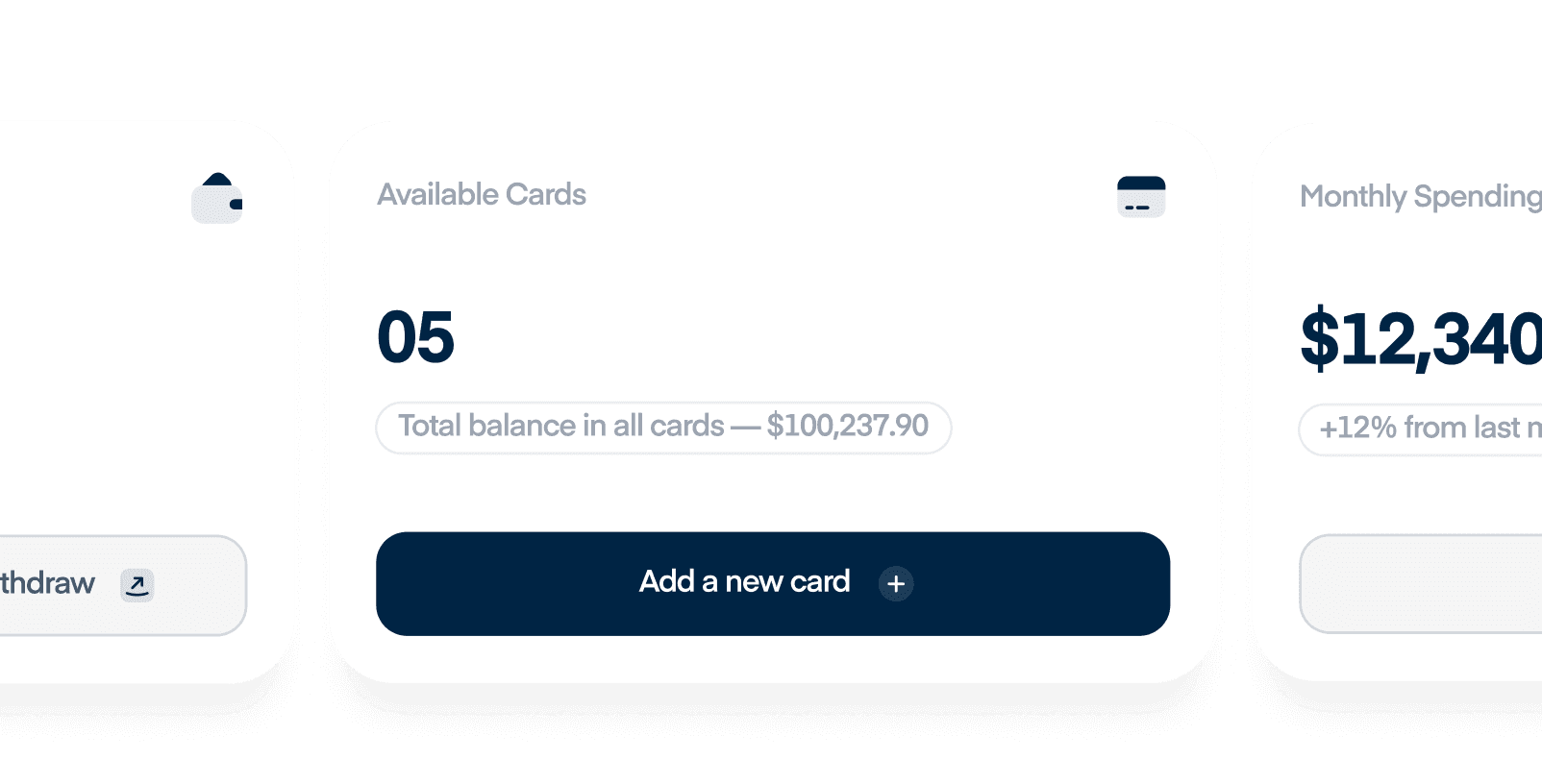
Manage Multiple Cards
Manage Multiple cards across teams and projects
Crypto funding


Fund in NGN, GHS, or Stablecoins

Team Cards
Assign cards to teams instantly
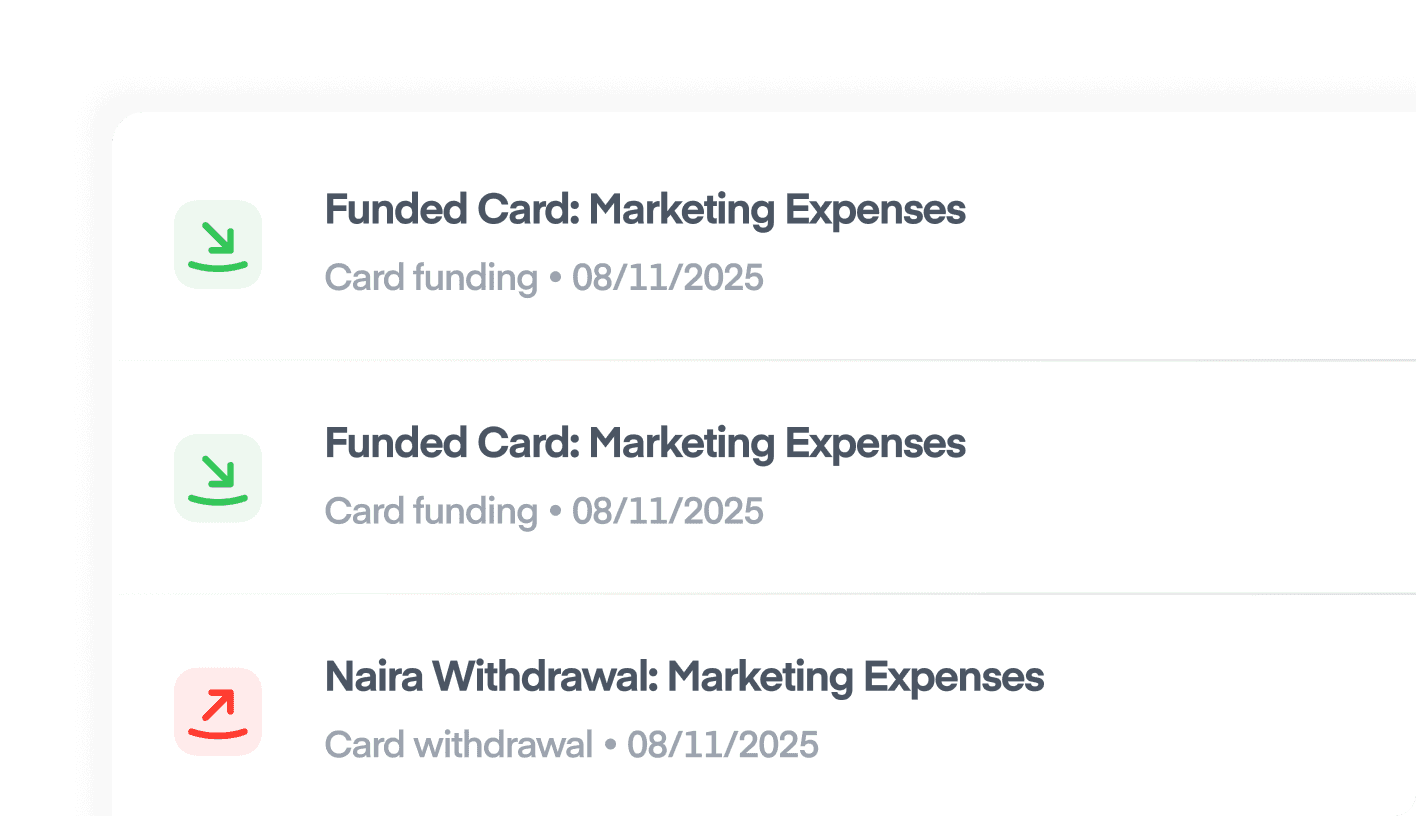
Expense Tracking
Track every expense in real time
Team management
Full team management and spend oversight


Advertising