
How to Structure Business Cards for Better Spending Control
TL;DR: The fix to most businesses' spending chaos is to stop issuing cards to people and issue them to purposes instead; cards for one card per team, project, vendor, or client. When every card carries its own limit, owner, and real-time trail, this turns the card into a record, so nobody has to go digging to answer "who spent what, and was it approved?"
This guide walks through how to set that up, and the peculiarities for African businesses specifically.
6 Minutes

Why African Businesses Can't Afford Loose Card Structure
Every "spend control" whitepaper for a US or European audience assumes your card works. That's not always a safe assumption for local economies.
Take Nigeria for instance; Nigerian banks suspended international spending on naira cards during the 2022–2023 FX crisis, and while several reinstated some access from July 2025, it came back with limits attached. GTBank's reinstated limit sits around $1,000 a quarter, UBA's is roughly the same, and First Bank caps monthly spend near $500. A single week of ad spend can use up any of these before the month is even halfway through.
These caps sit on top of a much bigger financing gap. The African Development Bank estimates Nigeria alone needs roughly $160 billion to meet the funding needs of its MSMEs, and across the continent, the AfDB puts that gap at $331 billion a year, with formal small businesses receiving less than 20% of the credit they actually need. Capital this hard to come by shouldn't be this easy to lose, and an unstructured card lets naira you fought for slip out a door nobody's watching.
None of this is unique to Africa, though it bites harder here. Nearly 40% of business leaders say financial admin is one of the biggest drains on their productivity, and the average small business owner loses more than four hours a day to manual financial tasks, reconciliation included. Processing just 1,000 expense reports can eat up 400 hours of a finance team's time, hours that could have gone into actually growing the business instead.
Card structure is the cheapest fix available for all of this. It doesn't require new financing, a bigger team, or a new bank. It just requires the cards a business already has to map to how that business actually spends.
Spending Control Starts With How You Structure Cards
The working strategy is moving away from one general-purpose card and toward several cards, each assigned to a specific purpose. A card can belong to a team, so marketing, HR, and engineering each spend from their own instrument instead of one shared statement nobody can untangle. It can belong to a project or an ad platform, so a business running Meta, Google, and TikTok at once can pause one campaign's card without touching the others. In fact, it can be assigned to a specific vendor or subscription, so AWS, Slack, or Figma each sit on their own spend ceiling, and cancelling a tool is as simple as freezing a card instead of hunting through a statement. And for agencies especially, it can belong to a client, so one client's payment issue never puts another's live campaign at risk.
The instinct is that whatever the business spends on, the card should trace back to exactly one purpose.

Set limits at the card level, not the company level
A company-wide budget tells you almost nothing about whether one team is overspending while another is unused. A per-card limit tells you the moment it happens, on the specific card it happened on.
Set monthly limits per card that match the actual budget for that team, project, or vendor, not a round number picked for convenience
Use tighter limits for anything experimental (a tool you're trialling or a short-run campaign) and looser ones for proven, recurring costs
Review limits quarterly. A structure that never gets revisited becomes just as unreliable as the mess it replaced
Assign ownership with role-based access
Structure is also about who can see them. Give team leads visibility into their own team's cards and spend, without exposing the company's full financial picture to everyone. This spreads accountability (a lead who can see their own overspend catches it faster than finance ever will) while keeping your finance function as the single data source for company-wide reporting.
Build in real-time visibility; don't wait for the statement
A structure only pays off if you can watch it work. Waiting for month-end statements means you're always reacting to an already executed expense. Many finance teams spend up to 40% of their working hours matching transactions across spreadsheets, bank statements, and internal systems after the money has already moved. A real-time, per-card dashboard makes most of that work unnecessary. Catch the unusual charge, the leak, the runaway subscription while it's still small, not after three months of statements have piled up.
A framework to get started
List every recurring spend category: teams, campaigns, vendors, clients
Create one card per category, not one card per person
Set a limit per card, based on actual budget
Assign a clear owner to each card, accountable for its spend
Fund in the currency the spend actually needs; a local currency card for local vendors, a dollar-equivalent or stablecoin-funded card for Meta, Google, AWS, and anything else that bills in USD
Review monthly: retire cards for cancelled tools, split cards that have outgrown one category, adjust limits as teams grow
Setting This Up on PIL
Pil issues cards this way by default, one purpose per card, with limits, ownership, and a real-time history attached from the start. If the structure in this guide sounds like work to set up, on Pil it's mostly just naming your first few cards.
Frequently asked questions
What does "card structure" mean for a business?
It means every card in use maps to one specific purpose instead of one shared card covering everything. Structure turns the card itself into a record of what the spend was for, before anyone has to ask.
How many business cards should a small company have?
There's no fixed number, it should match your spend categories, not your headcount. A 10-person startup running three ad platforms and five SaaS tools might reasonably run eight to ten virtual cards. More cards, each narrowly scoped, beats fewer cards trying to cover everything.
Why do Nigerian business cards keep getting declined on Meta or Google Ads?
Usually it's one of three things: your bank's international spending cap, the currency mismatch (Google Ads bills only in USD, for instance), or a risk-filter flag triggered by repeated failed attempts. Google Ads won't bill in Naira at all; the billing currency must be USD regardless of what country the account lists, which is why a dollar-funded virtual card solves a problem a naira card structurally can't.
Are virtual cards safe for business spending in Africa?
Yes, when issued through a regulated, PCI-DSS-compliant platform. Virtual cards actually reduce risk compared to shared physical cards, since each one can be frozen, limited, or retired independently without disrupting the rest of the business.
What's the fastest first step if our spending is a mess right now?
Don't try to fix everything in one week. Pick your three highest-spend categories, issue dedicated cards for those first, and expand the structure from there.
Author
Ayodeji Falaye
More Stories


Because payments shouldn’t hold your business back

Intuitive Navigation
Intuitive navigation: access anything in seconds
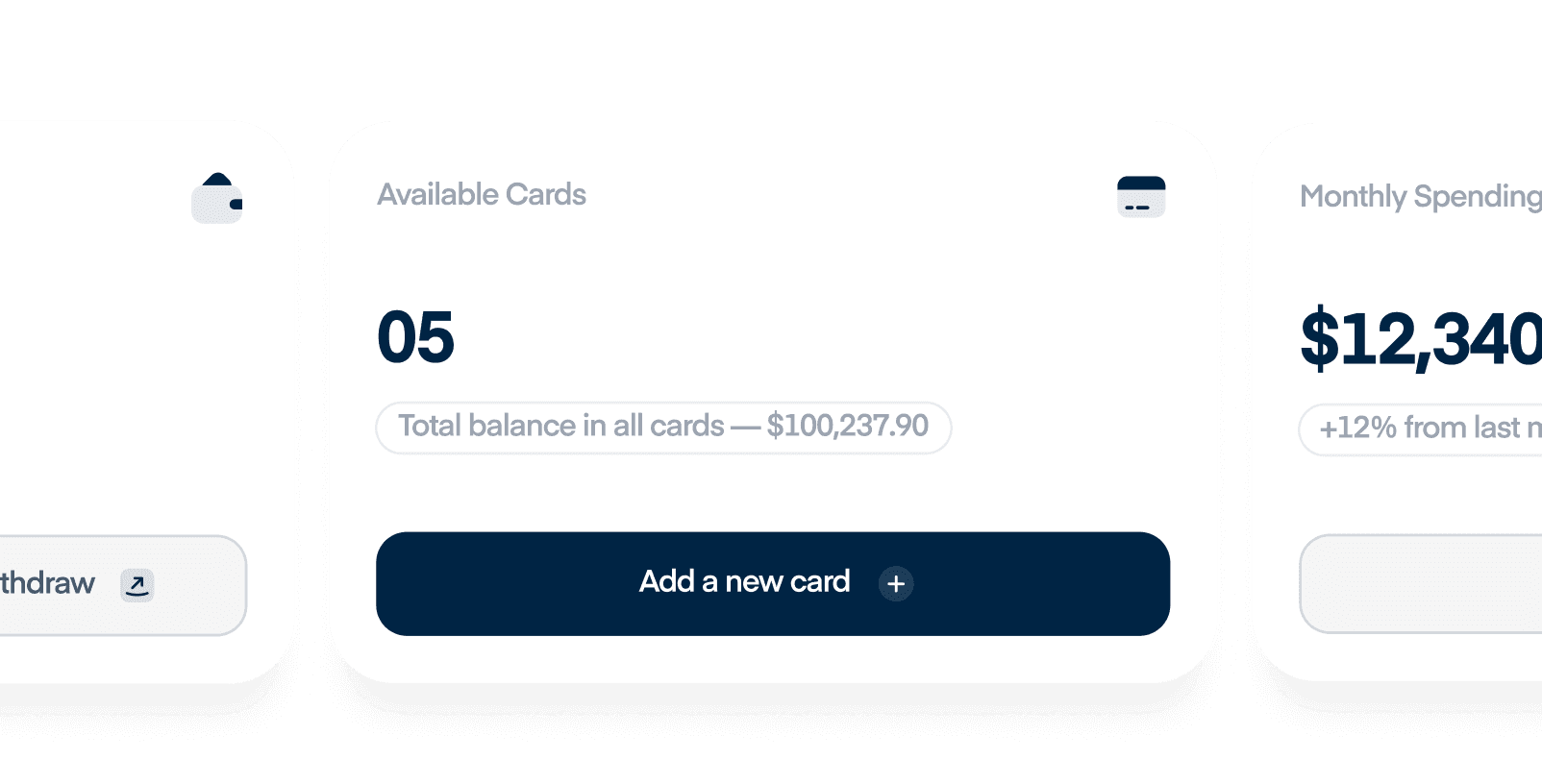
Manage Multiple Cards
Manage Multiple cards across teams and projects
Crypto funding


Fund in NGN, GHS, or Stablecoins

Team Cards
Assign cards to teams instantly
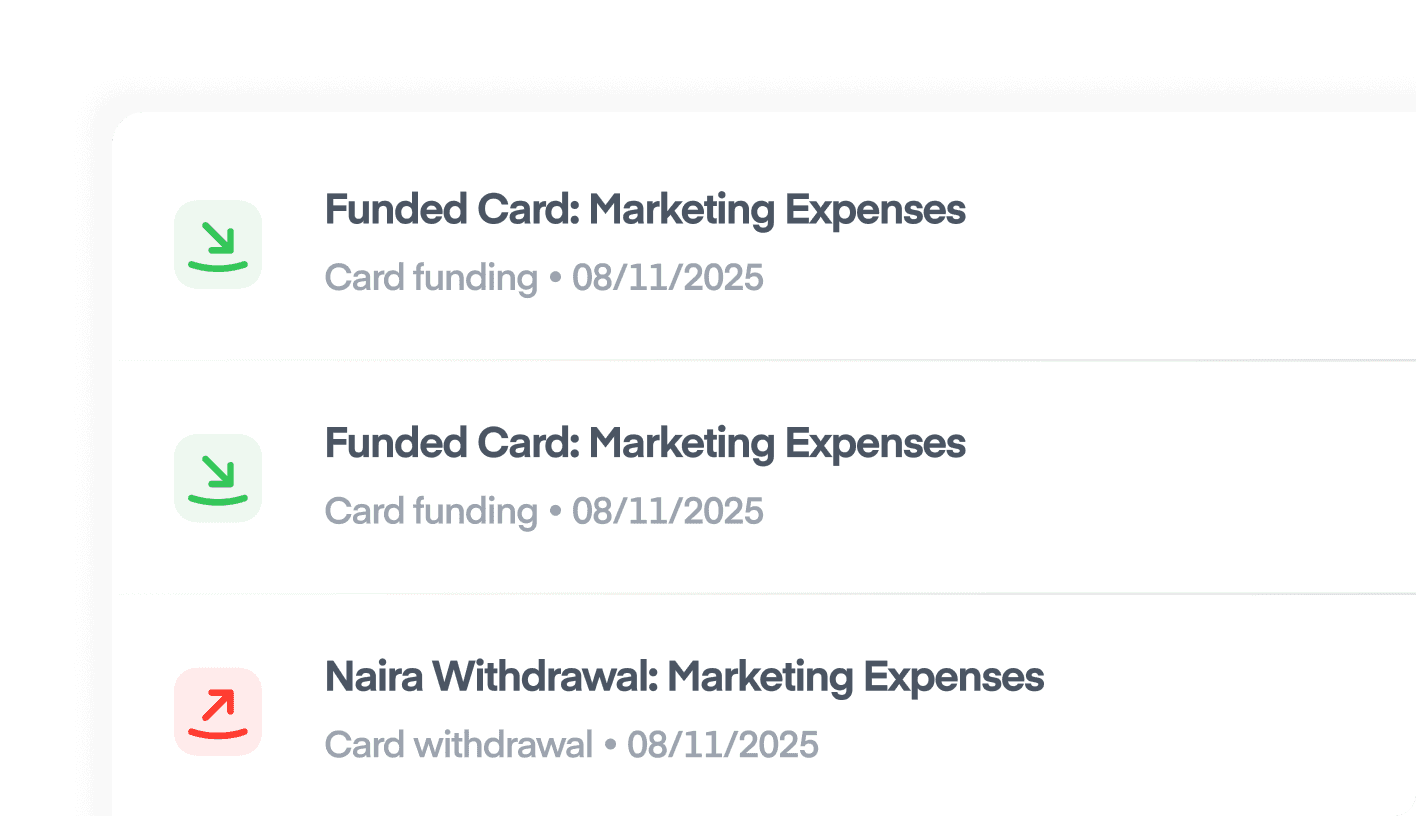
Expense Tracking
Track every expense in real time
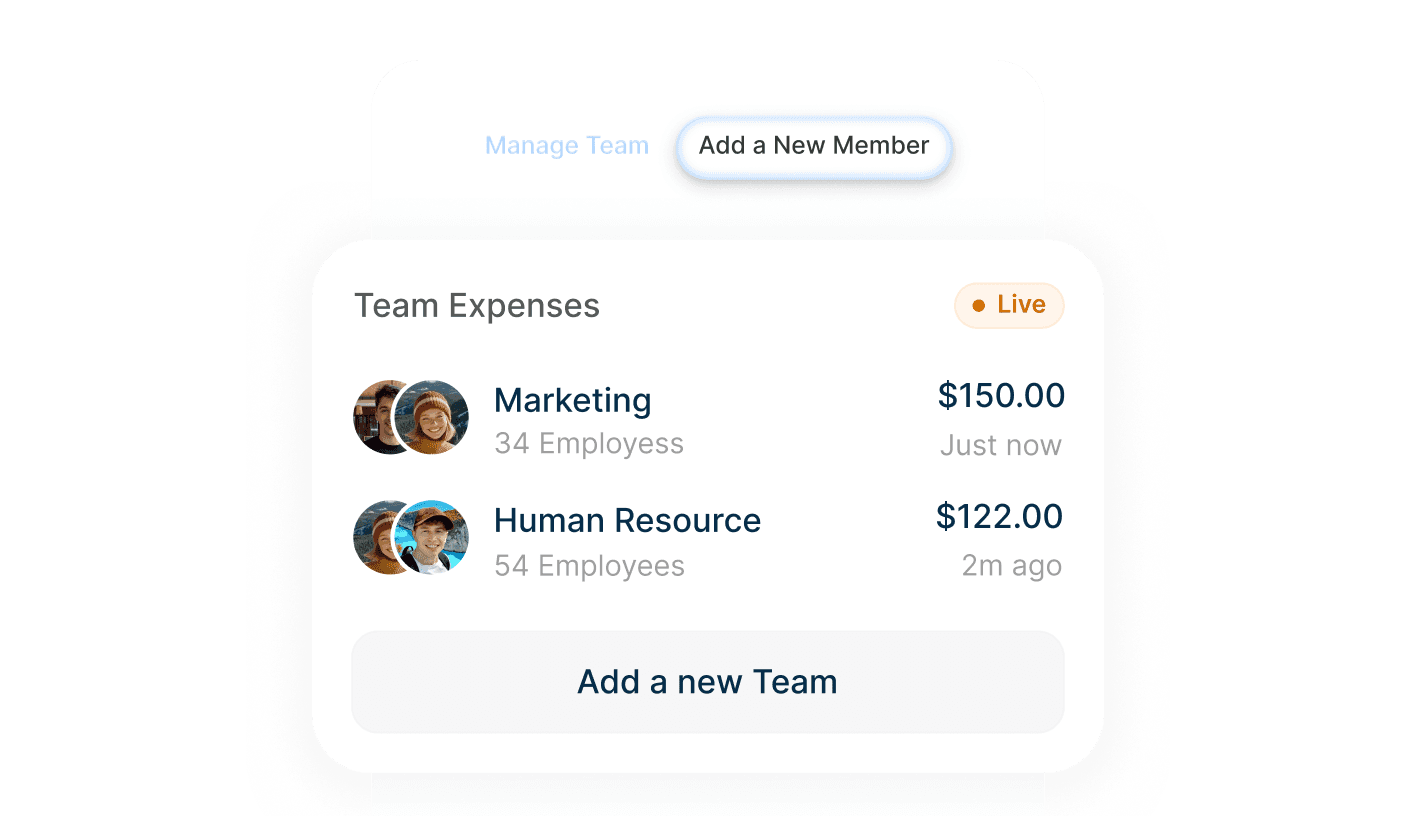
Team management
Full team management and spend oversight


Advertising