
How to Make Your African Startup Fundable in 2027: A Q1 2027 Growth and Runway Plan for SaaS Startups
To optimize your business for funding in 2027, use the first quarter to do four things: calculate your runway in months, clean up your financial records, prove your unit economics, and put spending under limits so your burn becomes predictable.
7 minutes

Consider these statistics:
African startups raised $2.16 billion in the first nine months of 2026, about 4% less than the same period in 2025.
343 startups announced rounds of $100,000 or more in the first ten months, down 22% from 2025.
Clearly, money is moving, but fewer companies are getting it, as investors tend to lean toward startups with clear business models and steady revenue. Which means the ones getting funded are mostly the ones whose numbers an investor can read quickly.
If that’s not you yet, then the first three months of 2027 are a good time to fix it. Tidying your books, working out how long your cash will last, and showing that each customer makes you money takes a few weeks.
What makes an African startup fundable?
A fundable African startup is one an investor can underwrite without guessing. It has enough runway to survive the raise, financial records that hold up in due diligence, unit economics that show each customer earns more than they cost, and spending controls that make future burn predictable.
Investors say the same thing in their own words. African Business reports that investors are placing a premium on strong unit economics, capital efficiency and clear paths to profitability, and VC4A describes investor readiness in 2026 as a clean path to profitability, robust unit economics and an organised data room that can withstand deep due diligence. A strong pitch gets you the first meeting, and the numbers decide what happens next.
How much runway does a startup need before it raises?
A startup should open a funding round with 12 to 18 months of runway left, and it should never wait until cash drops below six months. Runway is the number of months your cash will last at your current burn, and the standard calculation is cash on hand divided by monthly net burn. A startup with ₦90 million in the bank and a net burn of ₦6 million a month has 15 months of runway.
African founders need a second calculation, because many of the costs that matter most are priced in dollars. Suppose ₦2 million of that monthly burn goes on ads, cloud and software billed in dollars. If the dollar becomes 20% more expensive in naira, those costs rise by ₦400,000, the monthly burn becomes ₦6.4 million, and the runway falls to about 14 months. Investors who know the market are likely to ask for this scenario, so it is better to build it before they do.
What should you do in Q1 to become fundable?
You can become fundable in a quarter by treating January, February and March as three separate jobs: know your numbers, clean your records, and prove your growth.

January: Know your burn, runway and currency exposure
Calculate your net burn for the last three months by subtracting cash coming in from cash going out, then divide your cash on hand by that figure.
Split your burn into naira costs and dollar costs, and recalculate your runway with the dollar costs 20% higher.
List every recurring cost with a named owner, covering ads, cloud, software, contractors and team expenses, and cancel anything nobody uses.
Set a monthly ceiling for each cost category, so overspending is visible against a number you chose in advance.
February: Clean up your financial records
Prepare management accounts for the last 12 to 24 months, or audited statements if you have them.
Reconcile your bank and card statements to your books each month, and keep your accounting practices consistent.
Bring your tax filings up to date and keep proof of each one.
List your liabilities and commitments, including loans, annual subscriptions and contracts, and disclose them early.
Create a simple data room with one folder for each item above.
Nigerian legal practitioners advise that investors expect audited statements or management accounts for younger startups, bank statements and tax filings, along with consistent accounting and early disclosure of liabilities.
March: Prove your unit economics and your plan
Calculate your customer acquisition cost, gross margin, payback period and retention for each customer segment.
Write a 12-to-18-month plan tied to the specific milestones the new money will unlock.
Choose your raise date by working back from your runway, starting while 12 to 18 months remain.
Send investors a short monthly update with context.
What do investors ask for in due diligence?
Investors ask for evidence that your numbers are accurate, consistent and complete. This table shows the main items and how to prepare for each one in Q1.
Diligence item | What investors want to see | How to prepare |
Financial statements or management accounts | Clear sources and uses of funds | Close the books monthly with consistent accounting |
Bank and card statements | Proof that cash moved as reported | Reconcile each account and each payment card every month |
Tax filings | Regulatory compliance | File on time and keep proof |
Runway and burn model | How long the cash lasts | Update monthly, with naira and dollar scenarios |
Unit economics | Each customer earns more than they cost | Track acquisition cost, margin, payback and retention |
Liabilities and commitments | No hidden obligations | List loans, contracts and annual commitments early |
What mistakes make a startup look less fundable?
Investors read your finances as a sign of how well you run the company. Six mistakes weaken that signal, and each one has a simple fix.
Starting to raise too late. If you begin fundraising with under six months of runway, investors know you can’t walk away, and they can push on price and terms. Start while you still have enough cash to say no.

Treating revenue as cash. An invoice is not money in the bank. If you don’t track the gap between invoicing and collecting, your runway looks longer than it is. Report both billed revenue and cash collected.
Mixing personal and business spending. Blended accounts make reconciliation unreliable and raise doubts about every number you share. Keep separate accounts and cards for the business.
Leaving subscriptions and ad spend untracked. Small recurring charges add up when nobody owns them. Keep a live list of subscriptions, set spending limits, and review ad spend monthly.
Modelling runway in one currency. If you earn in naira but pay for cloud, ads and software in dollars, a naira-only model hides the risk. Show runway at your planning exchange rate and at a weaker one.
Sending metrics without context. A churn or growth figure with no explanation leaves investors guessing at the cause. Add one or two sentences on what drove each number and what you are doing about it.
Case study: how PIL’s parent company raised $2.1 million without a pitch deck
Cardtonic, the Nigerian fintech behind PIL, shows what a fundable company looks like from the investor’s side. For years it funded itself, first from its founders’ own pockets and then from revenue, and by its own account it had never run a fundraising round. When it decided to build PIL as a standalone product for businesses, it concluded that compliance, liquidity and infrastructure would cost more than bootstrapping could cover. In January 2026 it announced a $2.1 million seed round, funded entirely by angel investors.
Those angels had watched the company’s work up close for years. Cardtonic describes the raise as inviting people into a story they already understood, not selling them an idea. It also raised from strength: it had real operating data, and PIL itself came from solving its own problem of spending tens of thousands of dollars a month on ads, tools and subscriptions.
The lesson? Well, investors back what they can see. Clean books, tracked spending and a clear account of your numbers do much of the work a pitch does.
The bottom line
Investors in 2027 are likely to back the startups whose numbers hold up under questions, and the first quarter is the time to make yours do that. Calculate your runway in naira and dollars, close your books every month, prove your unit economics, and put every cost under a limit. By March you will know your position, and an investor will see it just as quickly.
Frequently asked questions
What makes an African startup fundable?
A fundable startup has enough runway to complete a raise, financial records that survive due diligence, unit economics that show customers earn more than they cost, and spending controls that make burn predictable.
How much runway should a startup have before raising?
Open a round while you still have 12 to 18 months of runway left, and avoid starting with less than six months. Pre-seed and seed startups often aim for 18 to 24 months once the round closes.
How long does fundraising take?
A raise commonly takes several months, and the process can take about six months.
What financial documents do investors ask for in Nigeria?
Investors typically ask for audited financial statements or management accounts, bank statements, tax filings and a list of liabilities, with consistent accounting practices.
How can a startup extend its runway?
Cancel unused subscriptions, set a limit on each cost category, review dollar-priced costs against the exchange rate, and collect receivables faster. Each of these makes burn more predictable.
Can virtual cards help a startup prepare for fundraising?
They help by producing categorised spend records. With PIL, each card has its own transaction list and its own statement, which you can export as a PDF or CSV for any date range.
Related reading: How to Build a Business Spend Management Process | 8 Signs Your Company Has a Spend Management Problem

Author
Ayodeji Falaye
More Stories


Because payments shouldn’t hold your business back

Intuitive Navigation
Intuitive navigation: access anything in seconds
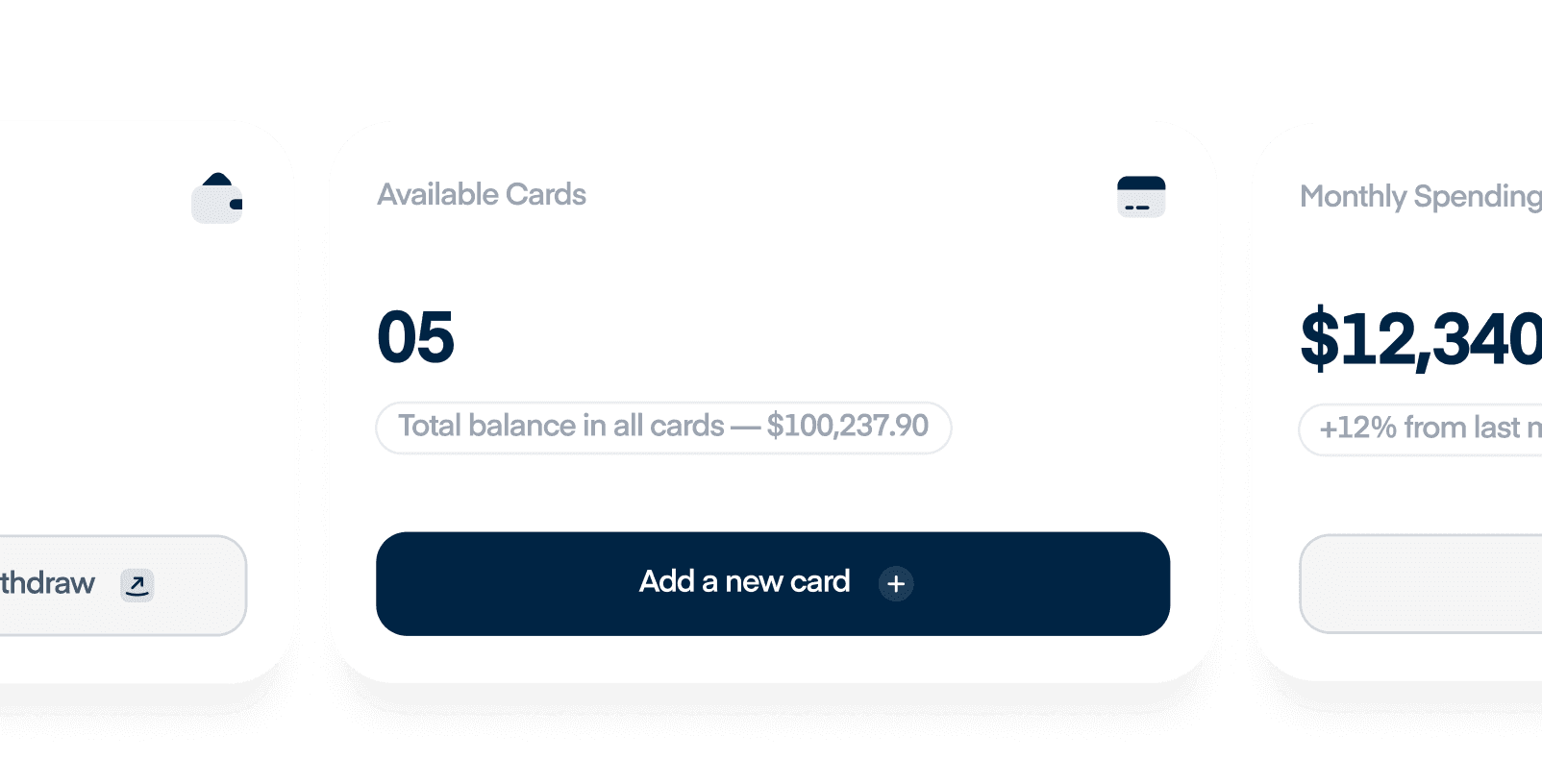
Manage Multiple Cards
Manage Multiple cards across teams and projects
Crypto funding


Fund in NGN, GHS, or Stablecoins

Team Cards
Assign cards to teams instantly
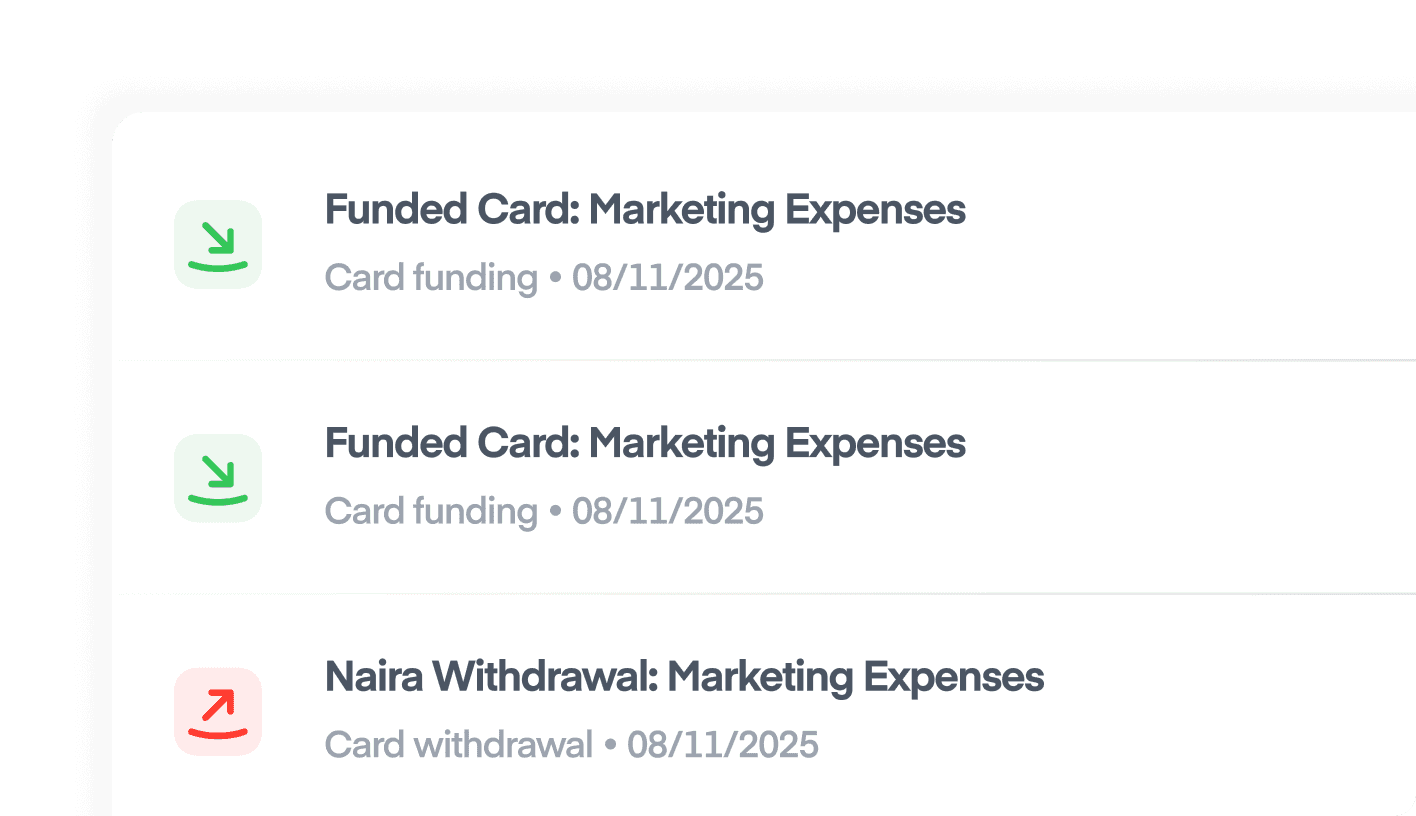
Expense Tracking
Track every expense in real time
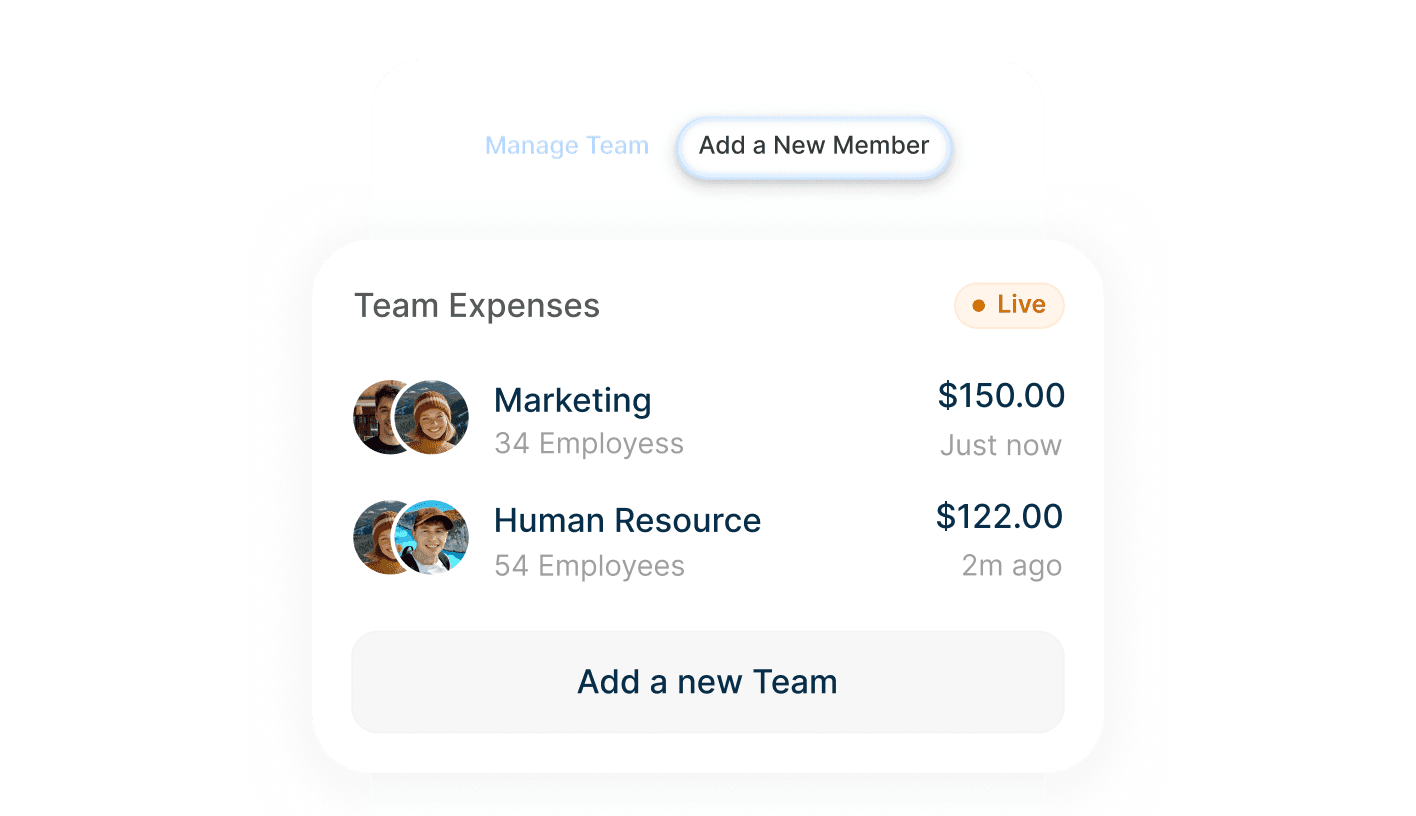
Team management
Full team management and spend oversight


Advertising